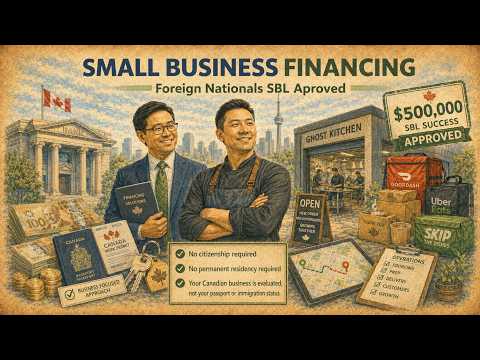
Small Business Financing
E9: What Can You Finance?
CSBFP provides up to $1,000,000 in term loans. Real property financing allows $1,000,000 maximum. Equipment and leasehold improvements allow $500,000 maximum. Working capital and intangible assets allow $150,000 within equipment limits. Flexible mixing accommodates specific business needs. Multiple independent businesses qualify separately. CSBFP Loan Amounts: How Much Financing Can You Access Through Canada Small Business Financing Program The Canada Small Business Financing Program (CSBFP) offers substantial financing helping Canadian entrepreneurs achieve business goals. Understanding maximum loan amounts and eligible uses ensures you structure optimal financing for your business across Canada. Real Property Financing: Up to $1,000,000 CSBFP Maximum The full $1,000,000 CSBFP term loan maximum is available for purchasing or improving commercial real property you will own. This includes buying buildings for your business, constructing new facilities, or renovating existing properties throughout Toronto, Vancouver, Calgary, Montreal, Edmonton, Ottawa, Winnipeg, and communities across Ontario, British Columbia, Alberta, Quebec, Saskatchewan, Manitoba. Real estate represents major investments for growing businesses. CSBFP makes commercial property ownership more accessible through government-backed financing with competitive interest rates and favorable repayment terms up to 15 years. Equipment and Leasehold Improvements: Up to $500,000 Maximum Within the $1,000,000 maximum, up to $500,000 can finance equipment purchases and leasehold improvements for Canadian small businesses. Equipment includes vehicles, machinery, computers, software, manufacturing equipment, restaurant equipment, medical equipment, construction equipment, and specialized tools for your trade or industry. Leasehold improvements are upgrades you make to rented commercial premises including renovations, partitions, installations, build-outs, HVAC systems, electrical upgrades, plumbing improvements, and other modifications helping you operate businesses efficiently. Working Capital and Intangible Assets: Up to $150,000 Maximum Up to $150,000 within the $500,000 equipment and leasehold limit finances intangible assets and working capital for Canadian businesses. Intangible assets include franchise fees, business permits, professional licenses, goodwill when buying existing businesses, incorporation costs, patents, trademarks, and other non-physical business assets. Working capital covers day-to-day operating expenses including inventory purchases, payroll expenses, rent payments, professional fees, utilities, insurance, marketing costs, and other operational expenses keeping businesses running. Flexible CSBFP Financing Structures You can mix and match within CSBFP limits based on specific business needs. Example combinations include: $700,000 for commercial building purchase and $300,000 for equipment; $450,000 for real property, $200,000 for equipment, and $150,000 for working capital; $1,000,000 exclusively for commercial real estate; $500,000 exclusively for equipment and leasehold improvements. This flexibility lets you structure CSBFP financing fitting your specific business situation whether launching startups, expanding established operations, or acquiring existing businesses across restaurant industry, manufacturing, healthcare practices, retail stores, construction companies, hospitality businesses, or professional services. CSBFP Registration Fee Considerations The 2% CSBFP registration fee can be included in your loan amount, providing convenience if you prefer financing it rather than paying upfront. However, registration fees count against maximum limits, so factor this into your financing planning. A $500,000 loan includes $10,000 registration fee, reducing available capital to $490,000. Multiple Business Ownership and CSBFP Limits If you own multiple related businesses, CSBFP limits apply collectively across all related entities. However, if your businesses operate independently at separate locations without sharing significant revenue between them (less than 25% revenue sharing), each business can qualify for full CSBFP amounts independently. This enables diversified entrepreneurs to access CSBFP financing for multiple independent ventures across different industries and geographic locations throughout Canada. Visit www.capitaltoolkit.com for professional CSBFP guidance. #CSBFPLoanAmounts #CSBFPFinancing #SmallBusinessLoansCanada #CSBFP #LoanLimits #EquipmentFinancing #RealPropertyFinancing #WorkingCapital #LeaseHoldImprovements #CanadianBusinessFinancing
What you’ll know after watching
- Map your planned purchases against eligible asset categories
- Spot the categories the program will not fund
- Restructure ineligible purchases or pair the SBL with other financing
Relevant to
Read deeper
Up next
E14
Loan Security
CSBFP loans require business asset security. Lenders take first-ranking charges on financed equipment or real property. Intangible assets and working capital use General Security Agreements covering business assets. Personal assets cannot be used as CSBFP security, your home is protected. Security is properly registered under provincial legislation. Like all business loans, Canada Small Business Financing Program (CSBFP) loans require security protecting lender investments and government guarantee programs. Understanding security requirements helps Canadian entrepreneurs prepare professional CSBFP applications across Canada. First-Ranking Charges on Equipment and Real Property When you finance equipment or commercial real property through CSBFP, lenders take first-ranking charges on those specific assets. This means if loans aren't repaid, lenders have first claim on those items, similar to how car loans are secured by vehicles or mortgages by houses. Assets you're purchasing serve as collateral for CSBFP loans helping you acquire them. For commercial real property in Toronto, Vancouver, Calgary, Montreal, Edmonton, and throughout Ontario, British Columbia, Alberta, Quebec, this means first mortgages on buildings or land. For equipment financing across Canada, lenders register security interests under provincial personal property security legislation including Ontario PPSA, BC PPSA, and Alberta PPSA. These registrations are standard practice in business lending protecting lender interests in manufacturing equipment, restaurant equipment, medical equipment, construction equipment, vehicles, and other financed assets. General Security Agreements for Intangible Assets and Working Capital For financing without physical form, intangible assets like franchise fees, permits, licenses, goodwill, or working capital covering inventory, payroll, professional fees, lenders take General Security Agreements (GSA) covering business assets generally. GSAs provide security even when there isn't specific equipment to register against. General Security Agreements are common for service businesses, consulting firms, professional services, technology companies, and businesses where value derives from expertise rather than physical assets throughout Saskatchewan, Manitoba, Nova Scotia, New Brunswick. Personal Assets Cannot Be Used as CSBFP Security Here's something critical: personal assets cannot be used as security for CSBFP loans. Your home, personal vehicles, personal savings, and personal investments are protected under CSBFP regulations. Security is always business assets, not personal ones. This represents a significant benefit compared to conventional business financing where lenders often demand secured personal guarantees backed by home equity. CSBFP personal guarantees must remain unsecured protecting personal property across Canada. Equal Ranking Security with Combined Financing If using CSBFP financing alongside other financing for the same asset, security ranks equally between lenders. This ensures fair treatment if repayment issues arise and protects all parties involved. Proper Security Documentation and Registration Security must be properly documented and registered under provincial legislation to be valid. Lenders handle these technical details through legal counsel, but entrepreneurs should understand this is part of CSBFP processes. Proper security registration protects lending program integrity and your access to beneficial CSBFP terms across TD Bank, RBC, BMO, Scotiabank, CIBC, and credit unions. Security Release and Substitution Possibilities As your business grows and loan balances decrease, you may release or substitute security with lender approval. The goal is maintaining appropriate protection while recognizing your evolving business circumstances and reduced risk profiles. Professional CSBFP Security Guidance Capital Toolkit advisors help Canadian entrepreneurs understand CSBFP security requirements, prepare proper documentation, and navigate registration processes. CPA-certified consultants ensure compliance with provincial security legislation. Visit www.capitaltoolkit.com for professional CSBFP guidance. #CSBFPSecurity #LoanCollateral #BusinessAssets #SmallBusinessLoansCanada #CSBFP #SecurityRequirements #GeneralSecurityAgreement #BusinessFinancingCanada #CanadianEntrepreneurs #PPSARegistration