
Watch
Capital Toolkit on YouTube.
39 short video explainers on small business financing, valuation, debt strategy, and what lenders actually look for. Free, no commitment, available on YouTube and indexed here for context and search.
Playlist
Small Business Financing
How the Canada Small Business Financing Program actually works, plus the case studies behind real funded deals.
See the dedicated Small Business Financing page →
Foreign Worker SBL, 2:50
8 views
Shanghai entrepreneur on work permit secures $500,000 CSBFP loan for Vancouver cloud kitchen. No Canadian credit history required. Capital Toolkit guided the process. Can a foreign national on a work permit get government backed small business financing in Canada? Wei Chen proves the answer is yes. This Shanghai entrepreneur secured $500,000 through the Canada Small Business Financing Program to launch his cloud kitchen operation in Vancouver, British Columbia.Wei arrived in Canada on an Intra Company Transfer work permit. After two years managing logistics, he identified a gap in the Vancouver food delivery market for authentic regional Chinese cuisine. The challenge was financing. Wei had no Canadian credit history, no permanent residency, and no experience with Canadian banking.Capital Toolkit connected Wei with the resources he needed. Their SBL loan specialists explained that the CSBFP has no citizenship requirements. The program cares about Canadian businesses operating in Canada, not the passport of the owner. Wei incorporated Chen Culinary Inc. in BC and became eligible immediately.Since his new corporation had no Canadian credit history, the lender obtained credit references directly from Wei as the principal shareholder. Capital Toolkit helped him gather documentation from his bank in China showing ten years of responsible credit management. The educational videos at www.capitaltoolkit.com/sbl taught Wei how the CSBFP process worked, and the platform's professional application framework helped him build a business plan with detailed financial projections that demonstrated repayment capacity through Canadian cash flows.The $500,000 financed commercial wok stations, industrial refrigeration, ventilation and fire suppression systems, food prep stations, point of sale systems integrated with delivery platforms, and leasehold improvements that transformed a raw Burnaby industrial unit into a licensed commercial kitchen.Eighteen months later, Chen Culinary operates three ghost kitchen concepts in Metro Vancouver and employs twelve people. Revenue exceeds projections.For foreign nationals in Vancouver, Burnaby, Richmond, Surrey, or anywhere in British Columbia considering small business ownership, Wei's story demonstrates that immigration status is not a barrier to CSBFP financing. The program is designed for Canadian businesses, regardless of who owns them.Visit www.capitaltoolkit.com/sbl to access educational videos about the CSBFP process and build your professional application. Capital Toolkit's SBL loan specialists have helped dozens of foreign nationals in BC secure government backed financing.Your citizenship doesn't determine your eligibility. Your preparation does. #VancouverSmallBusiness #CSBFP #CanadaSmallBusinessFinancing #VancouverEntrepreneur #BCBusiness #CloudKitchen #ForeignNationalBusiness #ImmigrantEntrepreneur #VancouverFoodBusiness #WorkPermitCanada #BurnabyBusiness #Capital Toolkit #CapitalToolkit #SmallBusinessLoan #GovernmentBackedLoan #VancouverStartup #CanadianSmallBusiness #NewToCanada #BCEntrepreneur #GhostKitchen
CSBFP NOW for Foreign Nationals, 2:20
10 views
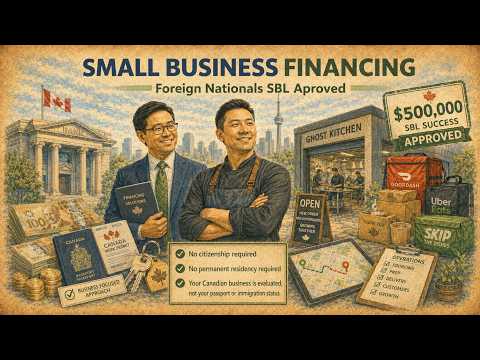
Foreign nationals can access CSBFP financing. No citizenship required. No permanent residency required. The program evaluates your Canadian business, not your passport or immigration status. Can Foreign Nationals Get Government Backed Business Loans in Canada? Think you need to be a Canadian citizen or permanent resident to get a government backed small business loan? You don't. And today I'm going to explain exactly how the Canada Small Business Financing Program works for foreign nationals. The Official Rule The CSBFP Guidelines from April 2024 state this explicitly: "There are no restrictions as to the principal of a small business. An incorporated small business operating in Canada can be owned by foreign citizens." This isn't a loophole. It's the actual rule. What Actually Matters The program evaluates the business, not the person. Four criteria determine eligibility: the business is carried on in Canada with a place of business in Canada, assets are held in Canada for operating the business, gross annual revenues don't exceed $10 million, and the business offers services or products to the public. Notice what's NOT required: no Canadian citizenship, no permanent residency, no work permit, no visa status, no requirement to be a Canadian resident at all. Four Practical Implications First, structure matters. You need to incorporate a Canadian company. The corporation becomes the borrower. You become the shareholder. The corporation operates in Canada with Canadian assets serving Canadian customers. Second, credit verification requires documentation from your home country. Bank statements, letters confirming loans paid in full, credit card records, landlord references. The lender obtains credit references from you as the principal shareholder since your new corporation has no Canadian history. Third, personal guarantees are unsecured. You'll sign a guarantee for the loan amount, but the lender cannot take your home or personal assets as collateral. The legal obligation is real, but your personal property remains protected. Fourth, due diligence focuses on Canadian cash flows. Your business plan must demonstrate repayment capacity through Canadian revenue. International experience matters, but Canadian customer commitments matter more. The Bottom Line Whether you're on a work permit, student visa, or living entirely outside Canada, if you incorporate a business in Canada that operates in Canada with Canadian assets, you can access up to $1 million in term loans plus up to $150,000 in working capital. Visit www.capitaltoolkit.com/sbl to access educational videos explaining the CSBFP process. Capital Toolkit's SBL loan specialists have guided foreign nationals from dozens of countries through successful applications. Your citizenship doesn't determine your eligibility. Your Canadian business does. #CSBFP #CanadaSmallBusinessFinancing #ForeignNationalBusiness #ImmigrantEntrepreneur #CanadianBusiness #SmallBusinessLoan #GovernmentBackedLoan #WorkPermitCanada #NewToCanada #CanadianEntrepreneur #BusinessFinancing #StartupFunding #Capital Toolkit #CapitalToolkit #SmallBusinessCanada #ImmigrantBusiness #ForeignOwnership #CanadianIncorporation #BusinessLoan #SBLLoan #CanadaStartup #EntrepreneurVisa #BusinessImmigration #CanadianSmallBusiness #NewcomerBusiness #InternationalEntrepreneur #CanadaBusiness #SmallBusinessFinancing #GovernmentLoan #BusinessCredit

Restaurant Expansion Secured, 2:42
3 views
Smart restaurant owners use equipment financing to build successful food service operations. Through Canada Small Business Financing Program (CSBFP) restaurant loans, this entrepreneur secured funding for commercial kitchen equipment, restaurant furniture, point-of-sale systems, and leasehold improvements. Restaurant equipment financing provided working capital for commercial ovens, refrigeration units, food prep stations, and dining room upgrades without depleting cash reserves. Government-backed small business loans made restaurant startup affordable while maintaining operational cash flow. The result? A profitable restaurant business competing effectively with established competitors. Strategic restaurant financing enabled immediate modernization, faster service, higher quality food preparation, and superior customer experience. Canadian restaurant financing through CSBFP covers up to $1.15 million for equipment purchases, renovations, and business expansion, helping food service entrepreneurs transform restaurant concepts into thriving businesses generating consistent revenue and building equity. Successful Canadian entrepreneurs understand that strategic borrowing accelerates business growth faster than bootstrapping alone. The Canada Small Business Financing Program (CSBFP) provides government-backed small business loans up to $1.15 million, enabling business owners across Canada to build profitable enterprises through smart capital investment and equipment financing. **Understanding CSBFP Small Business Loans** The Canada Small Business Financing Program, formerly called Small Business Loans Act (SBLA), offers federally-backed business financing with 85% government loan guarantees. This Small Business Loan program reduces bank risk, making capital accessible to entrepreneurs who might not qualify for traditional commercial loans or conventional bank financing. CSBFP financing covers equipment purchases, leasehold improvements, and real property acquisition for businesses generating under $10 million annual revenue. From Toronto restaurants to Vancouver manufacturing operations, Calgary professional services to Montreal retail stores, Canadian small businesses across every province leverage CSBFP loans for business expansion and modernization. **How Strategic Business Borrowing Builds Equity** Smart business owners use financing to preserve working capital while investing in revenue-generating assets. Equipment financing, commercial real estate loans, and leasehold improvement financing create business value and equity without depleting cash reserves needed for operations, payroll, and emergency situations. Consider restaurant financing: borrowing $500,000 for commercial kitchen equipment, dining room renovations, and point-of-sale technology enables immediate operation at full capacity. The alternative, saving cash over years, means losing market share to competitors who opened faster using strategic financing. Manufacturing businesses use equipment loans for CNC machines, production equipment, and technology upgrades that increase output and reduce costs. Healthcare practices finance medical equipment and clinic renovations through CSBFP, building profitable practices while maintaining cash flow for operational expenses. #CSBFP #SmallBusinessLoans #CanadaBusinessFinancing #EquipmentFinancing #SmallBusinessCanada #BusinessGrowth #CanadianEntrepreneurs #RestaurantFinancing #ManufacturingLoans #HealthcareFinancing #RetailBusinessLoans #ConstructionFinancing #GovernmentBackedLoans #BusinessExpansion #WorkingCapital #SmallBusinessFunding #EntrepreneurCanada #BusinessEquipment #CommercialLoans #StartupFinancing

Small Business Real Estate, 0:54
1 views
Small businesses pay high lease costs but lack capital for property purchases. CSBFP provides up to $1 million government-backed financing for commercial real estate with 15-year terms. Convert lease payments into mortgage payments building equity, not landlord wealth. Ownership provides stability, tax advantages, and wealth creation through property appreciation. CSBFP Commercial Real Estate Purchase: Stop Paying Rent, Start Building Wealth Every rent check you write builds your landlord's equity, not yours. The Canada Small Business Financing Program (CSBFP) provides up to $1 million in government-backed financing specifically for commercial real estate purchases, helping Canadian small business owners convert lease expenses into wealth-building mortgage payments. The Banker's Secret: Commercial Real Estate Builds Wealth Bankers know commercial real estate builds wealth better than anyone. They understand buying can be cheaper than leasing when you factor in equity accumulation, property appreciation, and tax advantages. That wealth goes in your pocket, not your landlord's. Many small businesses across Toronto, Vancouver, Calgary, Montreal, Edmonton, Ottawa, and throughout Ontario, British Columbia, Alberta, Quebec pay high lease costs because they believe they can't afford property purchases. However, the Canadian government in partnership with banks has made commercial real estate ownership easier than ever through CSBFP financing. CSBFP Commercial Real Estate Financing Terms CSBFP provides up to $1 million for purchasing commercial real estate with 15-year government-backed terms. If your potential mortgage payment could be less than your current lease payment, CSBFP financing can help you start building equity instead of paying rent. Interest rates are capped at prime plus 3% for floating rates or residential mortgage rates plus 3% for fixed rates, providing predictable financing costs. With current Canadian rates, this typically means 7-10% interest rates for commercial property ownership. Building Equity Through Property Ownership Every mortgage payment builds your equity. Every year of property appreciation increases your net worth. Commercial real estate in major Canadian markets has historically appreciated 3-6% annually, creating substantial wealth over 10-20 year ownership periods. A $600,000 commercial property purchased with $1 million CSBFP financing (including renovations and improvements) appreciating at 4% annually is worth $888,000 after 10 years. Combined with mortgage principal reduction, you've built $400,000+ in equity while operating your business, wealth that would have gone to landlords if you continued leasing. Property Ownership Provides Business Stability Equity provides operational stability. Property owners control their locations, avoid lease renewal negotiations, eliminate landlord restrictions on improvements or operations, and never face forced relocation when leases expire. Restaurant owners control kitchen layouts and expansions. Manufacturing businesses modify facilities for production needs. Healthcare practices design patient-centered spaces. Retail stores optimize customer experiences without landlord approval requirements. Industries Benefiting from CSBFP Commercial Real Estate Restaurants and hospitality businesses purchase properties eliminating lease costs while building valuable real estate equity in high-traffic locations. Manufacturing operations buy industrial facilities providing long-term operational stability. Healthcare practices including medical clinics, dental offices, and physiotherapy centers purchase professional buildings. Retail stores acquire prime locations in growing markets. Professional services own office buildings appreciating alongside business growth. Any small business generating under $10 million annual revenue operating in Canada qualifies for CSBFP commercial real estate financing across Saskatchewan, Manitoba, Nova Scotia, New Brunswick, and all Canadian provinces and territories. Stop Paying Someone Else's Mortgage If you think your mortgage cost could be less than your current lease payment, CSBFP financing may help you own your business foundation. Stop building your landlord's wealth, start building your own through property ownership. Professional CSBFP Real Estate Financing Guidance Hashtags: #CommercialRealEstate #CSBFP #PropertyOwnership #StopPayingRent #BuildEquity #SmallBusinessRealEstate #CommercialProperty #WealthBuilding #CanadianBusinessOwners #Capital Toolkit

Clinic Expansion Financed, 2:45
Physiotherapy clinic turning away patients due to limited treatment rooms expanded from three to eight using $485,000 CSBFP financing for healthcare equipment and leasehold improvements. Capital Toolkit advisor compiled billing records, patient growth data, equipment specifications meeting lender requirements. Four-to-six-month approval process enabled expansion and second location planning. A growing physiotherapy clinic in Canada faced a critical problem: turning away patients because they ran out of treatment rooms. Expanding from three treatment rooms to eight required substantial capital for healthcare equipment and leasehold improvements, but physiotherapists are healthcare professionals, not finance experts. The Healthcare Business Financing Challenge Healthcare equipment and clinical build-outs are expensive investments. Treatment tables, therapy equipment, diagnostic tools, and professional leasehold improvements for medical-grade facilities require hundreds of thousands of dollars in upfront capital. Most healthcare professionals lack this capital while growing their practices. This physiotherapy clinic needed to meet growing patient demand across their Toronto, Vancouver, Calgary, Montreal, or other Canadian market location. Without expansion financing, they would continue turning away patients, limiting both revenue growth and their ability to serve their community's healthcare needs. Why Healthcare Businesses Have Strong CSBFP Approval Rates Capital Toolkit advisor Sean explained that healthcare businesses often have strong financing approval rates under the Canada Small Business Financing Program (CSBFP) because healthcare equipment retains value as tangible assets and healthcare revenues tend to be stable and predictable. Physiotherapy clinics, dental practices, medical clinics, chiropractic offices, and other healthcare businesses generate consistent revenue from established patient bases. This stability appeals to lenders across TD Bank, RBC, BMO, Scotiabank, CIBC, and credit unions throughout Ontario, British Columbia, Alberta, Quebec, Saskatchewan, Manitoba evaluating CSBFP applications. Professional CSBFP Application Preparation for Healthcare Practices Capital Toolkit helped compile comprehensive documentation including five years of billing records demonstrating revenue growth, patient volume data showing expanding demand, and detailed equipment specifications meeting healthcare standards and lender requirements. This thorough preparation addressed exactly what banks need to approve CSBFP healthcare financing: proof of stable revenue, demonstrated market demand, clear equipment specifications, and professional business planning. CSBFP Approval: $485,000 for Healthcare Equipment and Leasehold Improvements The bank approved $485,000 CSBFP financing for leasehold improvements transforming the clinic space and healthcare equipment including treatment tables, therapy equipment, diagnostic tools, and professional infrastructure expanding capacity from three to eight treatment rooms. This substantial financing enabled the physiotherapy clinic to more than double treatment capacity, serve significantly more patients, increase revenue substantially, and position for continued growth including second location planning. Honest Timeline Expectations: Four to Six Months Focused Work What impressed the clinic owner most was Capital Toolkit's honesty. Sean explained upfront that the CSBFP process would require four to six months of focused work preparing documentation, working with lenders, and managing approval processes, not some quick or "guaranteed" approval that unethical advisors might promise. This realistic timeline expectation set proper expectations and demonstrated professional integrity distinguishing Capital Toolkit from advisors making unrealistic promises. The four-to-six-month timeline proved accurate, and the focused work was worth every hour invested. Growth Beyond Initial Expansion: Second Location Planning The clinic is now planning a second location and exploring longer-term growth options leveraging their successful first expansion. This demonstrates how strategic CSBFP financing creates growth momentum enabling businesses to expand beyond initial projects into sustained multi-location development. Hashtags: #HealthcareFinancing #PhysiotherapyClinic #CSBFP #MedicalPracticeExpansion #HealthcareEquipment #ClinicalExpansion #SmallBusinessLoansCanada #HealthcareBusiness #Capital Toolkit #PracticeGrowth

Logistics Growth Financed, 3:09
5 views
Trucking company lost major contract due to insufficient fleet capacity and aging vehicles with high fuel costs. Capital Toolkit advisor Sean explained CSBFP wasn't appropriate, identified alternative financing options, improved financial reporting over two months. Comprehensive financing package secured trucks, yard property, working capital. Achieved 30% fuel reduction, regained lost contract. A Canadian logistics company wasn't losing work because of demand, they lost contracts because they didn't have enough trucks. Aging fleet vehicles hurt profit margins through excessive fuel costs, and insufficient capacity meant turning away profitable business across Toronto, Vancouver, Calgary, Montreal, and Canadian logistics markets. The Fleet Capacity Crisis The company lost a major contract specifically because they didn't have enough trucks to service the work volume. This capacity constraint directly cost revenue and prevented business growth despite strong market demand for logistics services. They needed six new trucks to meet demand and compete effectively, but that meant well over $1 million in financing, a substantial capital requirement for small and mid-sized logistics companies operating across Ontario, British Columbia, Alberta, Quebec. Failed Generic "Financing Advisors" The logistics company spoke with several so-called "financing advisors" who couldn't deliver viable solutions. Generic brokers lack industry-specific expertise understanding logistics financials, equipment financing structures, and alternative capital sources. When they contacted Capital Toolkit, they worked with Sean, who had real experience with logistics and transportation businesses. This industry expertise made the critical difference. Honest Assessment and Financial Preparation Sean explained upfront that the Canada Small Business Financing Program (CSBFP) wasn't appropriate for their situation and outlined other financing alternatives clearly. This honest assessment demonstrates professional integrity, turning away CSBFP applications when alternative solutions better serve clients. More importantly, Sean was upfront that their financials needed improvement before approaching lenders. The company spent approximately two months cleaning up bookkeeping, strengthening financial reporting, organizing tax returns, and preparing professional financial statements. This preparation transformed their application from likely rejection into approvable financing. The two-month investment in financial cleanup created exponentially more value than rushing weak applications to lenders across TD Bank, RBC, BMO, Scotiabank, CIBC. Comprehensive Financing Package About four months after submitting strengthened applications, the company received approval for comprehensive financing allowing them to purchase new trucks reducing fuel costs, acquire their own yard property eliminating lease expenses, and secure working capital to hire additional staff. Professional expertise identifying appropriate financing, strengthening financial fundamentals, and securing comprehensive packages delivers returns exponentially exceeding advisory fees. Professional Logistics Business Financing Capital Toolkit specializes in financing for logistics companies, trucking operations, and fleet-based enterprises across Canada. CPA-led advisory, transparent fees, 30 years expertise positioning logistics operators for sustainable growth. Contact Capital Toolkit to explore your logistics business growth options. Visit www.capitaltoolkit.com for professional business financing guidance. Financing outcomes vary based on lender criteria, business financials, and individual circumstances. Illustrative examples based on events. Hashtags: #LogisticsFinancing #TruckingCompany #FleetFinancing #CommercialVehicles #BusinessExpansion #TransportationFinancing #SmallBusinessCanada #WorkingCapital #Capital Toolkit #BusinessGrowth

Equipment Financing Success, 2:19
1 views
Manufacturing CNC Equipment Financing Success Manufacturing company with 15-year-old CNC machines lost contracts to competitors with modern equipment. Banks repeatedly declined financing. Capital Toolkit advisor prepared three years financial statements, equipment quotes, customer demand letters, strategic projections. Secured $850,000 replacing entire machine shop. Won back two major contracts. 5% professional fee delivered exceptional value. A Canadian manufacturing company faced a critical competitive disadvantage: their CNC machines were 15 years old and they were losing contracts to competitors with newer, more efficient equipment. Despite strong customer demand and viable business operations, banks kept saying "maybe," but never "yes" to equipment financing requests. The Outdated Equipment Competitive Disadvantage Fifteen-year-old CNC machines cannot compete with modern manufacturing equipment offering superior precision, faster production cycles, lower defect rates, and advanced automation capabilities. Manufacturing businesses across Toronto, Vancouver, Calgary, Montreal, Edmonton, and throughout Ontario, British Columbia, Alberta, Quebec operating with outdated equipment face systematic competitive disadvantages losing contracts to competitors investing in modern machinery. The company needed substantial capital to replace their entire machine shop with modern CNC equipment, but traditional bank financing applications kept getting delayed or declined despite obvious business need and market demand. CSBFP manufacturing equipment financing provides up to $500,000 for equipment purchases with government-backed terms, favorable interest rates capped at prime plus 3%, and repayment periods up to 10 years keeping monthly payments manageable while businesses implement new equipment and realize operational improvements. Immediate Competitive Results: Major Contract Recovery The manufacturing company has already won back two major contracts they lost last year due to outdated equipment limitations. Modern CNC machines enabled them to bid on contracts requiring precision tolerances, production speeds, or automated capabilities their old equipment couldn't deliver. This immediate contract recovery demonstrates why equipment modernization creates competitive advantages translating directly into revenue growth, market share recovery, and long-term business sustainability across manufacturing, machining, fabrication, and production industries throughout Saskatchewan, Manitoba, Nova Scotia, New Brunswick, and all Canadian provinces. Why Manufacturing Equipment Financing Requires Specialized Expertise Manufacturing equipment financing differs substantially from general business loans. Lenders need detailed equipment specifications, supplier quotes, installation timelines, production capacity analysis, quality improvement projections, and clear understanding of how modern equipment creates competitive advantages justifying substantial capital investment. Generic business loan advisors cannot provide this industry-specific expertise. Capital Toolkit's manufacturing sector experience means understanding CNC equipment capabilities, production efficiency metrics, quality control improvements, and how modern manufacturing technology translates into competitive positioning and financial performance. Professional CSBFP Manufacturing Equipment Financing for Canadian Businesses Capital Toolkit specializes in CSBFP equipment financing for manufacturing companies, machine shops, fabrication businesses, and production operations across Canada. CPA-led advisory, transparent 5% success fee, 30 years expertise positioning manufacturers for equipment modernization, competitive advantage, and sustainable growth. Contact Capital Toolkit to explore your manufacturing equipment financing options. Visit www.capitaltoolkit.com for professional CSBFP manufacturing financing guidance. #ManufacturingFinancing #CNCEquipment #CSBFPManufacturing #EquipmentFinancing #MachineShop #ModernizationFinancing #SmallBusinessCanada #ManufacturingGrowth #Capital Toolkit #IndustrialEquipment

Great Financing Opportunity, 2:16
3 views
CSBFP financing supports startups, established businesses, and business acquisitions with stage-appropriate requirements. Startups leverage personal credit history, business plans, and industry experience. Established businesses present financial track records and banking relationships. Business purchasers need asset appraisals and purchase price breakdowns. Capital Toolkit Advisors guide entrepreneurs through CSBFP applications at every business stage. One of the most valuable features of the Canada Small Business Financing Program (CSBFP) is its availability across all business lifecycle stages, whether you're launching a brand new venture in Toronto, growing an established business in Vancouver, or acquiring an existing company in Calgary, Montreal, or throughout Ontario, British Columbia, Alberta, and Quebec. CSBFP for Startup Businesses: Getting Your Venture Off the Ground If you're starting a new business, welcome to Canadian entrepreneurship! CSBFP can help you launch with financing for equipment purchases, leasehold improvements, and working capital needs up to $500,000. Since startups lack historical financial statements, lenders focus on three critical factors: Business Plan and Financial Projections: Your comprehensive business plan demonstrates market understanding, competitive positioning, revenue models, and realistic financial projections. This documentation replaces the historical financials established businesses provide. Personal Credit History: For startup applications, personal creditworthiness becomes especially important. Lenders need confidence that the people behind the business are financially responsible. A strong personal credit score (typically 650+) and clean credit history work significantly in your favor. Successfully managed mortgages, car loans, or credit cards demonstrate debt management capability that translates into business financing credibility. Industry Experience and Expertise: Have you worked in this field before? Do you possess relevant skills, certifications, or specialized training? Lenders want assurance you understand your market and have the technical expertise to execute your business plan. This is your opportunity to showcase your background, vision, and operational competence. CSBFP for Established Businesses: Leveraging Track Record If you're running an established business, you have distinct advantages in the CSBFP application process. You can demonstrate actual financial performance through tax returns, financial statements, and proven cash flow rather than relying solely on projections. Lenders can assess how you've managed business finances, handled seasonal fluctuations, maintained margins, and grown revenue over time. This historical data provides concrete evidence of business viability and management competence. Existing banking relationships also help significantly. If you've maintained accounts at a financial institution for years and managed them responsibly, that history speaks volumes. Your banker already knows your business, which can make the CSBFP process smoother and faster. CSBFP for Business Acquisitions: Purchasing Going Concerns Buying an existing business? CSBFP can finance that acquisition too. When purchasing a going concern (a business that's been operating recently), you'll need: Asset Appraisal: Professional valuation of the assets you're acquiring, including equipment, fixtures, inventory, and real estate if applicable. Purchase Price Breakdown: Clear allocation of the purchase price across different asset categories eligible under CSBFP rules. This protects both you and the lender by ensuring fair value and proper documentation. Business acquisitions offer the advantage of existing financial track records, customer bases, and operational infrastructure, making them attractive financing opportunities under CSBFP. Stage-Appropriate Documentation Requirements The CSBFP program recognizes that businesses at different stages have different documentation capabilities. Startups can't provide five years of tax returns, and that's understood. Established businesses shouldn't need to over-emphasize personal credit when strong business financials exist. Business acquisitions require different due diligence than organic growth financing. #CSBFP #StartupFinancing #BusinessAcquisition #CanadianEntrepreneurs #SmallBusinessLoan #BusinessGrowth #StartupFunding #Capital Toolkit #SmallBusinessFinancing #EntrepreneurCanada

Small Business Brains: Run vs Grow, 3:01
8 views
Running vs. Growing: Strategic Debt for Business Expansion Running businesses maintains operations. Growing businesses builds equity. Strategic debt finances revenue-generating assets, accelerates market capture, and builds competitive advantages impossible through bootstrapping alone. Debt grows businesses. **Grow Your Business Through Strategic Debt Financing: CSBFP Business Loans Canada** Most business owners confuse running a business with growing a business. Running maintains operations, paying bills, serving customers, managing employees. Growing builds equity, captures market share, and creates competitive advantages through strategic capital investment. Debt financing accelerates business growth impossible through bootstrapping alone. **Strategic Debt Creates Business Equity** Smart entrepreneurs understand that borrowing to acquire revenue-generating assets builds business value faster than saving cash. The Canada Small Business Financing Program (CSBFP) provides government-backed loans up to $1.15 million specifically for equipment purchases, real property acquisition, and leasehold improvements that drive business expansion. Strategic debt financing preserves working capital for operations while investing in growth. Restaurant owners financing commercial kitchen equipment generate immediate revenue without depleting cash reserves. Manufacturing businesses borrowing for production equipment increase output and profitability while maintaining operational flexibility. Healthcare practices financing medical equipment build patient capacity and practice value simultaneously. **How Debt Financing Accelerates Business Growth** Consider two competing restaurants: one saves three years to buy equipment cash, the other finances equipment immediately. The financed restaurant operates at full capacity for three years, capturing market share, building customer loyalty, and generating profits while the bootstrapped competitor saves. By the time the saver opens, the financed business dominates the market with established reputation and customer base. This pattern repeats across every industry. Manufacturing companies financing CNC machines and production equipment capture contracts competitors can't fulfill. Dental practices financing modern equipment attract patients seeking advanced care. Retail stores financing renovations and technology create shopping experiences driving customer preference. Debt financing compresses growth timelines, enabling businesses to capture opportunities requiring immediate action rather than waiting years for cash accumulation. **Restaurant Growth Financing**: Commercial kitchen equipment, dining renovations, point-of-sale systems, refrigeration upgrades, bar equipment, patio expansions creating revenue growth **Manufacturing Expansion Loans**: CNC machines, production equipment, automation technology, warehouse facilities, industrial machinery increasing production capacity and profitability CSBFP financing enables Canadian entrepreneurs in major metropolitan markets and smaller communities to compete effectively, modernize operations, and build valuable businesses through strategic debt investment. **Professional Guidance Maximizes Financing Success** CPA-certified business financing advisors provide expertise navigating CSBFP applications, bank requirements, and strategic positioning maximizing approval rates. Professional advisors charging 5% success fees (versus 10% industry standard) make expert guidance accessible while maintaining ethical standards through professional licensing. **Competitive Advantage Through Strategic Borrowing** Markets reward businesses investing in growth. Competitors financing modernization today capture tomorrow's market share. Businesses waiting to save cash lose competitive positioning to enterprises leveraging strategic debt for immediate advantage. Equipment breakdowns, expansion opportunities, and market shifts don't wait for convenient timing. Debt financing enables immediate response to competitive threats and growth opportunities. **Building Business Value Through Leverage** #BusinessGrowth #DebtFinancing #StrategyDebt #CSBFP #SmallBusinessLoans #BusinessExpansion #CanadaBusinessFinancing #EquipmentFinancing #BuildEquity #BusinessEquity #SmallBusinessCanada #CanadianEntrepreneurs #GrowYourBusiness #BusinessLeverage #StrategicBorrowing #RestaurantGrowth #ManufacturingExpansion #HealthcarePracticeGrowth #RetailExpansion #ConstructionGrowth #HospitalityFinancing #BusinessModernization

WTF are Bankable Economics?, 2:21
3 views
Why Banks Decline CPA-Prepared Financial Statements Banks require unit economics visibility, not just CPA-compliant statements. Production businesses misclassify shop rent, utilities, insurance, subcontractors, owner production time, and machine maintenance as operating expenses instead of Cost of Sales. Capital Tool Machining showed 40% gross margin, but proper allocation revealed 15.4% true margin. Capital-ready presentations enable financing. The Uncomfortable Truth About CPA-Format Statements Many small businesses present the wrong version of their financial story to lenders and equity investors, even with proper CPA-format statements. The issue isn't CPA competence, it's that lender underwriting requires specific analysis of true unit economics and cash flow resilience that standard presentations don't clearly show. The Core Problem: Production Costs Misclassified as Overhead In production businesses, machining, fabrication, manufacturing, construction, trades with real shop operations, huge portions of "operating overhead" are actually production-driven costs. When these costs sit below gross profit in Operating Expenses, income statements look healthy while job economics are quietly thin. Common culprits misclassified as overhead: shop-floor rent (mostly production space, not office), utilities consumed by machines and shop processes, insurance driven by shop activity and equipment, subcontractors hired completing revenue jobs, owner "salary" that's actually working-owner production time, and machine maintenance required keeping production capacity operational. When these costs remain in Operating Expenses below gross profit, you inflate gross margin and create misleading messages: "We have great margins, we just need to manage overhead." Banks read that and think: "Show me the economics of producing revenue." Why Lenders Anchor on Gross Profit and Gross Margin Most lenders and investors anchor hard on Gross Profit and Gross Margin because it answers the first underwriting question: Does the business make money on the work itself, before office operations and financing are considered? If gross margin is overstated because production-driven expenses were parked in Operating Expenses, lenders must either decline because they can't confidently underwrite what they can't see, or request schedules, adjustments, and clarifications creating friction and smaller approvals. Capital Tool Machining Case Study: The Numbers Capital Tool Machining for period ending December 31, 2025 showed traditional presentation with Revenue: CAD $10,000,000, Gross Profit: CAD $4,000,000 (40% margin), Net Income: CAD $100,000. After proper allocation showing bank underwriting view: Revenue: CAD $10,000,000, Gross Profit: CAD $1,542,000 (15.4% margin), Net Income: CAD $100,000. Same net income. Same business. Completely different story about production economics. The adjusted version moved CAD $2,458,000 in production-driven costs from Operating Expenses into Cost of Sales: shop rent allocation CAD $450,000, shop utilities allocation CAD $388,000, subcontractors (job delivery) CAD $900,000, production insurance allocation CAD $90,000, owner production time allocation CAD $480,000, machine maintenance CAD $150,000. This isn't creative accounting, it's accurate cost allocation showing what revenue actually costs to produce across manufacturing, construction, and production businesses throughout Saskatchewan, Manitoba, Nova Scotia, New Brunswick, and all Canadian provinces. Why This Matters for Bank Financing and Business Valuation Banks and equity investors look for reliability (repeatable results without heroic effort), resilience (performance when customers delay payment or machines fail), coverage (sufficient gross profit for debt service), and scalability (margins holding or improving with revenue growth). If adjusted gross margin is thinner than reported gross margin, lenders assume quoting may under-absorb facility burden, job profitability might be overstated, growth might increase revenue without increasing free cash flow, and the business could be fragile under leverage. This removes lender guesswork. When guesswork drops, approvals get faster, cleaner, and often larger for manufacturing businesses, construction companies, and production operations seeking financing. Professional Financial Statement Adjustment Services #BankFinancing, #FinancialStatements, #GrossMargin, #UnitEconomics, #SmallBusinessLoans, #ManufacturingFinance, #CPAAdvisory, #ProductionCosts, #CanadianBusiness, #Capital Toolkit

Capital Ready The Truth About Your Income Statement, 1:37
15 views
Manufacturing businesses often present inflated gross margins by misclassifying production costs as operating expenses. Capital Tool Machining showed 40% gross margin, but adjusting rent, utilities, owner labor, and subcontractors to Cost of Sales revealed true 15.4% margin. Banks fund repayable cash flow, not overhead illusions. Proper allocation enables financing. Manufacturing business owners wake up thinking about delivery dates, machine uptime, quotes, and hiring decisions. When growth opportunities arrive requiring capital for new equipment, expanded capacity, and larger jobs, they approach banks with CPA-prepared financial statements, and get declined despite strong revenue and apparent profitability. Capital Tool Machining exemplifies this frustration. The company generates $10 million revenue with 40% gross margin on CPA-prepared income statements. Owners see strong operations and conclude overhead drives their challenges. Banks see incomplete cost allocation and decline financing. The Overhead Allocation Problem Destroying Gross Margin Accuracy Banks don't fund grind, they fund structures surviving stress. Lenders ask: "What is the true cost of producing revenue?" If major production-driven costs sit below gross profit as operating expenses, gross margin is artificially inflated. Rent misclassification: If annual rent is $500,000 and 90% of the building is shop floor, rent is primarily a production cost, not operating expense. Leaving it entirely in operating expenses makes gross profit look better than actual job economics. Utilities allocation: Utilities at 4% of revenue ($400,000 for Capital Tool Machining) are not neutral admin costs when machines run 12 hours daily. Power draw belongs to production Cost of Sales, not operating expenses. Owner compensation and subcontractors: Working owners holding welding torches are not "overhead", that labor produces revenue. Subcontractors hired for specialized jobs deliver customer work, not admin functions. Misclassifying these as operating expenses inflates gross margin. Adjusted Financial Statements Reveal True Unit Economics When Capital Tool Machining's statements are adjusted using reasonable allocation assumptions, gross margin moves from 40.0% to 15.4% without changing net income. This shift changes the entire financing conversation. Banks can now see unit economics clearly: the shop generates approximately fifteen cents of gross profit before operating expenses, not forty cents. This materially different risk profile enables accurate underwriting of repayment capacity, sensitivity to downtime and price pressure, and cushion for principal repayment if quarterly performance weakens. Why CPA-Prepared Statements Still Get Declined Many owners feel confused when banks decline despite CPA-prepared financials. Banks aren't ignoring professional statements, they're translating them into underwriting views answering lender questions about debt service capacity, business sensitivity to operational challenges, and sustainable profit margins. Compliant financial statements don't automatically create capital-ready presentations. Banks need clear visibility into true unit economics, proper cost allocation, and realistic gross margins reflecting actual production costs. If you're wondering why financing feels out of reach, the answer often isn't "the bank doesn't understand." The answer is: banks are underwriting a version of your business that your statements don't clearly present. Stop walking into financing meetings with statements making lenders guess. Get professional assistance producing bank-ready, investor-ready packages: CPA-format income statements plus allocation schedules and management adjustments showing true unit economics for manufacturing, construction, professional services. When stories are properly presented, lenders move from "uncertain risk" to "understandable risk." Understandable risk gets funded. Capital Toolkit provides professional financial statement preparation and adjustment services for Canadian small businesses seeking bank financing, CSBFP loans, or investor capital. Visit www.capitaltoolkit.com for professional financial advisory services. #FinancialStatements #BankFinancing #GrossMargin #ManufacturingFinance #SmallBusinessLoans #UnitEconomics #CPAAdvisory #BusinessFinancing #CanadianManufacturing #Capital Toolkit

Don't Turn Down Work, 1:02
3 views
Business growing but equipment can't keep up? CSBFP/SBL financing provides up to $500,000 for equipment replacement and expansion. Stop turning down orders due to capacity constraints. Capital Toolkit Advisors handle all application paperwork, helping Canadian businesses break the overtime/outsourcing cycle and invest in growth while maintaining operational stability. capitaltoolkit.com. Your business is expanding. New orders are arriving. Revenue is climbing. But your equipment can't keep up, and you're trapped in the expensive cycle of overtime labor costs and outsourcing penalties that drain cash flow faster than growth can generate it. You're turning down profitable work because you've hit maximum capacity. The cruel irony: your business success is creating operational failure. The Growth Capacity Paradox Canadian Businesses Face: Without capital injection, you can't accept the contracts that would justify equipment investment. Without equipment investment, you can't scale to the next revenue tier. Growth stalls despite market demand. CSBFP Equipment Financing: The Government-Backed Solution: The Canada Small Business Financing Program (CSBFP), also called the Small Business Loan (SBL) program, provides up to $500,000 specifically for equipment purchases, machinery replacement, and facility upgrades enabling business expansion. This isn't conventional bank financing with restrictive covenants and personal guarantee requirements. CSBFP offers government-backed terms designed specifically for Canadian small businesses in growth phases requiring capital equipment investment. What CSBFP Equipment Financing Covers: → Manufacturing equipment and production machinery → Construction equipment and specialized tools → Commercial vehicles and transportation assets → Technology infrastructure and computer systems → Restaurant and food service equipment → Medical and dental practice equipment → Retail fixtures and point-of-sale systems → Agricultural equipment and farming machinery Breaking the Overtime/Outsourcing Cash Flow Drain: Consider a manufacturing business receiving $800,000 in new orders but lacking production capacity. Current options: Without CSBFP Financing: Pay overtime wages at 1.5-2x regular rates, outsource production at 40-60% markup, rent equipment at monthly costs that never build equity, turn down contracts exceeding current capacity. With CSBFP Equipment Financing: Purchase $500,000 in production equipment, eliminate overtime premium costs, bring outsourced work in-house at standard margins, accept all profitable contracts without capacity constraints, build equity in owned assets. The equipment pays for itself through eliminated overtime costs, recaptured outsourcing margins, and new revenue from previously declined contracts, often within 18-24 months. Interest Rates and Terms: CSBFP equipment loans offer interest rates capped at prime plus 5%, with repayment terms up to 10 years for equipment purchases. Government backing reduces lender risk, making approval more accessible than conventional commercial loans for businesses with 2-3 years of operating history. Need More Than $500,000? Capital Toolkit structures layered financing combining CSBFP equipment loans with conventional term financing, operating lines of credit, and vendor financing programs. Many growing Canadian businesses require $750,000 to $1.5 million for comprehensive equipment upgrades, we arrange that capital stack. Capital Toolkit Handles the Application Process: CSBFP applications require specific documentation: financial statements, equipment quotes, business plans, cash flow projections, and lender-specific forms. Capital Toolkit Advisors prepare all required application documents, coordinate with lenders, and guide you through approval processes minimizing your time investment. Jumpstart 2026 with Growth Capital: Equipment financing applications take 6-8 weeks from submission to funding. Starting now positions your business to deploy new equipment for Q2 production increases, summer construction season, or fall retail cycles depending on your industry. Stop turning down work. Stop bleeding cash to overtime and outsourcing. Stop limiting your growth to whatever your outdated equipment can handle. Call a Capital Toolkit Advisor today. Visit capitaltoolkit.com for CSBFP equipment financing guidance and professional application support for Canadian business growth. Hashtags #CSBFP #EquipmentFinancing #BusinessGrowth #CanadianBusiness #SmallBusinessLoan #ManufacturingFinance #ConstructionEquipment #Capital Toolkit #BusinessExpansion #CommercialFinancing

E16
Fueling Canadian Growth, 7:54
6 views
The Canada Small Business Financing Program (CSBFP) accelerates business growth creating economic value. Whether expanding operations, modernizing equipment, acquiring locations, or transforming capabilities, CSBFP provides government-backed financing up to $1.15 million fueling strategic development positioning Canadian businesses for sustained competitive advantage. **Growth Versus Survival Mode** Most Canadian businesses operate in survival mode, maintaining operations, replacing equipment when it fails, reacting to market pressures, competing on price. Growth-focused businesses invest proactively, expand capacity before demand requires it, position ahead of competitors, and create advantages commanding premium pricing across Toronto, Vancouver, Calgary, Montreal, and throughout Ontario, British Columbia, Alberta, Quebec. CSBFP financing transforms reactive management into proactive growth. New manufacturing equipment increases production capacity 40%, reduces defects 25%, and enables bidding on contracts requiring ISO certification. Restaurant expansion captures market share competitors can't serve during peak hours, enables private events generating 30% higher margins, and positions you as premier locations. Delivery fleet upgrades enable same-day service differentiating businesses, reduce maintenance downtime 60%, improve fuel efficiency 35%, and present professional images corporate clients require. **Strategic Growth Elements: Compound Effect** Equipment modernization creates efficiency gains compounding annually. Commercial bakeries upgrading to modern ovens with 30% better energy efficiency and 40% faster production don't just save utilities, combined savings fund expanded marketing, staff development, or product launches within 18 months. Bakeries delaying investments fall behind as competitors capture market share. Capacity expansion enables revenue growth impossible with existing constraints. Manufacturing shops adding CNC equipment can bid on contracts previously beyond capabilities, accessing new revenue streams. This is transformational market repositioning permanently elevating business categories. Market positioning through competitive advantages, faster delivery, superior quality, higher capacity, extended hours, advanced technology, separates you from competitors with outdated equipment across restaurant, manufacturing, healthcare, retail, construction, and professional services industries. **Strategic Planning Advantage** CSBFP preparation forces comprehensive strategic planning most entrepreneurs never complete. You'll develop financial projections modeling growth scenarios, competitive analyses identifying opportunities, operational efficiency plans, and risk management frameworks. This develops business acumen distinguishing sustainable growth from temporary revenue increases. The process forces transitions from self-employment to business ownership, from technician to entrepreneur, from reactive to proactive leadership. You'll identify operational inefficiencies consuming 15-25% of revenue. You'll recognize competitive vulnerabilities ignored because addressing them seemed impossible without capital. You'll discover growth opportunities you couldn't pursue. **Capital Structure Supporting Growth** CSBFP's government-backed framework provides longer amortization and lower interest rates, typically saving 2-4%. This preserves working capital for growth, marketing, and strategic development. A $350,000 equipment purchase conventionally might require $7,000 monthly over five years. CSBFP structures at $4,200 monthly over ten years, preserving $2,800 monthly funding marketing managers, sales staff, or growth initiatives. **Professional Strategic Growth Financing** Capital Toolkit specializes in CSBFP financing structuring aligning capital with sustainable growth. CPA-led advisory, 5% success fee, 30 years expertise positioning Canadian entrepreneurs for competitive advantage. Visit www.capitaltoolkit.com for strategic CSBFP guidance. #BusinessGrowth #CompetitiveAdvantage #CSBFP #StrategicFinancing #EquipmentModernization #CapacityExpansion #SmallBusinessLoansCanada #BusinessExpansion #CanadianEntrepreneurs #MarketPositioning

E15
You Are Approved, 2:23
65 views
CSBFP term loans extend up to 15 years with manageable payments. Interest rates capped at prime plus 3% (floating) or residential mortgage plus 3% (fixed). Payment schedules are flexible, monthly, seasonal, or escalating. First payment due within one year. Prepayment and rate conversion allowed with applicable fees. When your Canada Small Business Financing Program (CSBFP) financing is approved, you'll receive documentation outlining specific loan terms. Understanding what to expect helps Canadian entrepreneurs plan finances with confidence across Canada. **CSBFP Loan Repayment Periods and Amortization** CSBFP term loans extend up to 15 years, excellent for spreading payments on major equipment purchases, real property acquisitions, and leasehold improvements across Toronto, Vancouver, Calgary, Montreal, Edmonton, and throughout Ontario, British Columbia, Alberta, Quebec, Saskatchewan, Manitoba. This long repayment period keeps monthly payments manageable while you grow business operations. For commercial real property requiring longer amortization (25-year terms), CSBFP loans convert to conventional financing after the 15-year government coverage period ends, maintaining payment continuity. **CSBFP Interest Rate Caps and Regulatory Protections** Interest rates are federally regulated protecting Canadian borrowers. For floating rate loans, the maximum is lender's prime rate plus 3%. For fixed rate loans, it's lender's residential mortgage rate plus 3%. These caps include the 1.25% annual administration fee. Many lenders across TD Bank, RBC, BMO, Scotiabank, CIBC, and credit unions offer rates below these maximums. It pays to negotiate competitive terms based on creditworthiness and banking relationships. Current Canadian prime rates typically range 5-7%, meaning floating CSBFP rates cap around 8-10%. Fixed residential mortgage rates typically range 4-6%, meaning fixed CSBFP rates cap around 7-9%. **Flexible Payment Schedule Options** Your CSBFP payment schedule can be tailored to fit your business operations. While you need at least one principal payment and one interest payment annually, you have flexibility in how those are structured. Payment options include blended monthly payments providing consistent planning, seasonal schedules (excellent for businesses with busy and slow seasons like tourism, agriculture, retail, hospitality), or escalating payments that start lower and increase as business grows. Seasonal businesses can structure higher payments during peak revenue months and lower payments during off-seasons, matching debt servicing to actual cash flow patterns. **First Payment Timeline and Grace Period** The first CSBFP payment is due within one year of receiving funds, giving entrepreneurs time to put financing to work before repayment begins. This breathing room is especially valuable when investing in equipment installation, facility construction, business acquisition transitions, or operational ramp-up periods. The grace period allows businesses to generate revenue from financed assets before commencing debt servicing, improving cash flow management during critical early phases. **Prepayment Options and Rate Conversion** If positioned to pay off CSBFP loans early through strong performance or refinancing, that's generally allowed, though prepayment fees may apply. Prepayment penalties typically equal three months' interest or interest rate differential calculations. You can also convert between fixed and floating rates if circumstances change, subject to applicable conversion charges. Rate conversion flexibility helps manage interest rate risk as conditions evolve. **Standard Fees and Documentation** Standard fees including loan setup, legal documentation, and security registration are charged at rates comparable to conventional business loans. Lenders must keep these reasonable and consistent with normal practices. Before first disbursement, you'll sign documentation setting out all details: principal amount, interest rate type, payment schedule, amortization period, security requirements, and terms. Review carefully. **Professional CSBFP Support** Capital Toolkit advisors help Canadian entrepreneurs understand CSBFP loan terms and review documentation before signing. We are with you to the end! Visit www.capitaltoolkit.com for CSBFP guidance. #CSBFPLoanTerms #LoanApproval #InterestRates #PaymentSchedule #SmallBusinessLoansCanada #CSBFP #LoanRepayment #BusinessFinancingCanada #CanadianEntrepreneurs #FlexiblePayments

E13
Loan Preparation, 2:30
7 views
CSBFP applications require credit information (personal and business), financial statements or business plans, tax returns, equipment invoices, proof of payment, independent appraisals when buying from related parties or existing businesses, purchase agreements with asset allocations, guarantor names, shareholder information. Thorough preparation demonstrates professionalism accelerating approval processes. Being well-prepared with documentation makes Canada Small Business Financing Program (CSBFP) applications smoother and faster. Understanding what lenders need helps Canadian entrepreneurs demonstrate professionalism. **Credit Information Requirements** Credit information is essential. Lenders check credit history for businesses (if established) and individuals behind them. For sole proprietorships, partnerships, or new corporations, personal credit is primary across Toronto, Vancouver, Calgary, Montreal, and throughout Ontario, British Columbia, Alberta, Quebec. Lenders access Equifax Canada and TransUnion Canada credit reports. This is normal for lending processes across TD Bank, RBC, BMO, Scotiabank, CIBC, and credit unions. **Financial Statements and Tax Returns** Established businesses provide financial statements (ideally accountant-prepared), business tax returns, and current revenue and expense information demonstrating repayment capacity. Financial statements should include balance sheets, income statements, and cash flow statements. Tax returns for past two or three years demonstrate consistent performance. **Business Plans for Startups** Startups provide comprehensive business plans with financial projections showing how businesses will generate income to cover loan payments. Plans should include market analysis, competitive positioning, management backgrounds, marketing strategies, revenue forecasts, expense budgets, and cash flow projections. **Equipment Invoices and Proof of Payment** When using CSBFP for equipment or leasehold improvements, provide invoices showing purchases and proof of payment. Invoices should describe assets including manufacturer, model numbers, and pricing. This confirms funds are used for eligible purposes including manufacturing equipment, restaurant equipment, medical equipment, and construction equipment. **Independent Appraisals** Appraisals are required when buying from related parties, purchasing existing businesses, or buying assets from your lender. Appraisals confirm fair market values protecting all parties. **Purchase Agreements** When buying businesses, purchase agreements must show how prices are allocated across asset categories: equipment, real property, inventory, goodwill. This determines CSBFP financing eligibility. **Guarantor and Shareholder Information** Registration forms request guarantor names and, for corporations, shareholder names and ownership percentages. For cooperatives, board member names may be required. **Business Plans and Industry Knowledge** Lenders appreciate thorough business plans, clear fund usage explanations, and industry knowledge evidence. Industry experience documentation includes resumes, certifications, licenses, and track records. **Professional CSBFP Support** Capital Toolkit advisors help Canadian entrepreneurs prepare comprehensive documentation packages. CPA-certified consultants understand lender requirements and strategic positioning. Preparation is the battle. Visit www.capitaltoolkit.com for CSBFP guidance. #CSBFPDocumentation #LoanDocuments #BusinessLoanRequirements #SmallBusinessLoansCanada #CSBFP #FinancialStatements #BusinessPlans #LoanApplication #CanadianEntrepreneurs #BusinessFinancingCanada

E12
Understanding the SBL Fees, 2:20
5 views
CSBFP financing includes a 2% registration fee (can be financed) and 1.25% annual administration fee built into interest rates. Standard commercial lending costs apply: application fees, legal costs, security registration, and appraisals when required. Prepayment charges may apply. Optional insurance available. Total costs often favorable versus alternatives. CSBFP Fees and Costs Explained: Complete Guide to Canada Small Business Financing Program Expenses Understanding costs associated with the Canada Small Business Financing Program (CSBFP) helps Canadian entrepreneurs budget accurately. This breakdown explains CSBFP fees and total borrowing expenses for small business loans across Canada. CSBFP Registration Fee: 2% Government Charge The CSBFP registration fee is 2% of your loan amount, paid to the federal government when financing is registered. For a $500,000 term loan, the fee equals $10,000. For a $300,000 equipment loan, the fee is $6,000. You can pay fees upfront or include them in financing. However, fees count against loan maximums. For lines of credit, the fee can be covered using the line itself, providing flexibility for business owners in Toronto, Vancouver, Calgary, Montreal, and throughout Ontario, British Columbia, Alberta, Quebec. Annual Administration Fee: 1.25% Built Into Interest Rates An annual administration fee of 1.25% is built into CSBFP interest rates, included in maximum rates: prime plus 3% for term loans, prime plus 5% for lines of credit. This fee sustains the program making government-backed business loans accessible, funding operations and guarantee claims through Innovation, Science and Economic Development Canada (ISED). Standard Commercial Lending Costs Beyond CSBFP fees, standard commercial costs apply across TD Bank, RBC, BMO, Scotiabank, CIBC, and credit unions. Application fees must be comparable to conventional loans, typically $500 to $2,500 depending on loan size. Legal costs for preparing documents, registering security, and completing documentation protect both parties. Legal fees typically range from $1,500 to $5,000 depending on complexity. Security registration charges for filing liens typically range from $100 to $500 per registration across Canadian provinces. Appraisal Costs for Asset Valuation Appraisal costs are typically paid by borrowers when purchasing from related parties, buying businesses, acquiring commercial property, or financing major equipment requiring value confirmation. Professional appraisal fees range from $1,500 to $5,000 for equipment and $2,500 to $10,000 for commercial property depending on complexity. Appraisals represent due diligence ensuring fair valuations. Prepayment Charges and Conversion Fees Early loan payoff may trigger prepayment charges, particularly for fixed-rate loans, typically equaling three months' interest or interest rate differential calculations. Switching between fixed and floating rates may involve conversion fees consistent with standard Canadian commercial lending. Optional Insurance Coverage Optional life or disability insurance may be offered protecting against circumstances affecting repayment. Premiums must be shown separately, not hidden in rates. Insurance isn't required but provides peace of mind. Premiums vary based on age, health, loan amount, and coverage terms. Comparing CSBFP Total Cost When comparing CSBFP to alternatives, consider total cost including fees, interest, and access advantages. CSBFP often provides otherwise unavailable financing or better terms than conventional options. The value proposition is significant: government-backed guarantees, competitive capped interest rates, loan amounts up to $1.15 million, and favorable repayment terms. Professional CSBFP Cost Analysis Capital Toolkit advisors help Canadian entrepreneurs understand total costs, compare alternatives, and structure optimal arrangements. CPA-certified consultants provide transparent cost analysis. Visit www.capitaltoolkit.com for professional CSBFP guidance. #CSBFPFees #CSBFPCosts #SmallBusinessLoanCosts #CanadaBusinessFinancing #CSBFP #LoanFees #BusinessFinancingCosts #SmallBusinessLoansCanada #CSBFPInterestRates #CanadianEntrepreneurs

E11
Loan Guarantees Demystified, 2:24
10 views
CSBFP personal guarantees must be unsecured, your home and personal assets are protected. Guarantees commit you personally to loan repayment if business cannot pay. Corporate guarantees can be secured. Sole proprietors face inherent liability. Guarantees can be released when loans are in good standing. Settlement flexibility exists. **CSBFP Personal Guarantees Explained: Your Protections Under Canada Small Business Financing Program** Personal guarantees are common in business lending representing your commitment to your venture's success. Understanding guarantees and protections under the Canada Small Business Financing Program (CSBFP) helps Canadian entrepreneurs make informed financing decisions. **CSBFP Personal Guarantees Must Be Unsecured: Critical Protection** Personal guarantees under CSBFP must be unsecured, important protection for borrowers. While lenders can require personal guarantees up to original amounts borrowed, they cannot require backing with personal assets like your home, vehicles, or investments. Your personal property remains protected under CSBFP regulations. This distinguishes CSBFP from conventional business loans where lenders often demand secured personal guarantees backed by home equity. For entrepreneurs in Toronto, Vancouver, Calgary, Montreal, and throughout Ontario, British Columbia, Alberta, Quebec, this provides significant peace of mind. **What Personal Guarantees Mean** Personal guarantees commit you personally to loan repayment if your business cannot repay. It demonstrates you stand behind your business. Most business owners willingly make this commitment because they believe in what they're building. Personal guarantees align entrepreneur and lender interests, showing serious commitment. For CSBFP applications across TD Bank, RBC, BMO, Scotiabank, CIBC, and credit unions, personal guarantees represent standard small business financing requirements. **Corporate Structure and Guarantee Requirements** If running an incorporated business, the corporation borrows money, but lenders typically require principal shareholders to guarantee loans personally. This aligns decision-maker interests and demonstrates people controlling the business have skin in the game. Corporate guarantees work differently. If you have related corporations with assets, lenders may ask those corporations to guarantee loans, and corporate guarantees can be secured by corporate assets. There's no cap on corporate guarantee amounts under CSBFP. **Sole Proprietor and Partnership Liability** For sole proprietors and partnerships, there's inherent personal liability for business debts. This is the nature of these structures, you and your business are legally the same entity under Canadian law. Incorporating provides separation between personal and business liability if that's a concern. Capital Toolkit advisors help determine optimal business structures balancing liability protection with tax efficiency. **Guarantee Release Possibilities** Guarantors can be released once CSBFP loans are in good standing, at lender discretion. As your business establishes itself and reduces loan balances, you may have opportunities to reduce personal exposure through guarantee releases. Release policies vary across institutions, but established businesses with strong payment histories often successfully negotiate guarantee releases or reductions. **Settlement Flexibility and Negotiation** If financial difficulties arise, lenders have flexibility negotiating settlements based on individual circumstances. The goal is finding workable solutions recognizing reality while honoring obligations. Compromise settlements, payment restructuring, and guarantee modifications represent common approaches. Working openly with lenders when difficulties emerge provides better outcomes than avoiding communication. Canadian banks prefer working cooperatively with honest borrowers facing legitimate challenges. **Professional CSBFP Guarantee Guidance** Capital Toolkit advisors help Canadian entrepreneurs understand personal guarantee implications, structure optimal business entities, and navigate guarantee requirements. CPA-certified consultants provide strategic guidance protecting personal interests while securing necessary financing. Where guarantees can happen. Visit www.capitaltoolkit.com for professional CSBFP guidance. #CSBFPGuarantees #PersonalGuarantees #SmallBusinessLoansCanada #CSBFP #UnsecuredGuarantees #BusinessLiability #CorporateGuarantees #SmallBusinessFinancing #CanadianEntrepreneurs #BusinessLending

E14
Loan Security, 2:30
19 views
CSBFP loans require business asset security. Lenders take first-ranking charges on financed equipment or real property. Intangible assets and working capital use General Security Agreements covering business assets. Personal assets cannot be used as CSBFP security, your home is protected. Security is properly registered under provincial legislation. Like all business loans, Canada Small Business Financing Program (CSBFP) loans require security protecting lender investments and government guarantee programs. Understanding security requirements helps Canadian entrepreneurs prepare professional CSBFP applications across Canada. First-Ranking Charges on Equipment and Real Property When you finance equipment or commercial real property through CSBFP, lenders take first-ranking charges on those specific assets. This means if loans aren't repaid, lenders have first claim on those items, similar to how car loans are secured by vehicles or mortgages by houses. Assets you're purchasing serve as collateral for CSBFP loans helping you acquire them. For commercial real property in Toronto, Vancouver, Calgary, Montreal, Edmonton, and throughout Ontario, British Columbia, Alberta, Quebec, this means first mortgages on buildings or land. For equipment financing across Canada, lenders register security interests under provincial personal property security legislation including Ontario PPSA, BC PPSA, and Alberta PPSA. These registrations are standard practice in business lending protecting lender interests in manufacturing equipment, restaurant equipment, medical equipment, construction equipment, vehicles, and other financed assets. General Security Agreements for Intangible Assets and Working Capital For financing without physical form, intangible assets like franchise fees, permits, licenses, goodwill, or working capital covering inventory, payroll, professional fees, lenders take General Security Agreements (GSA) covering business assets generally. GSAs provide security even when there isn't specific equipment to register against. General Security Agreements are common for service businesses, consulting firms, professional services, technology companies, and businesses where value derives from expertise rather than physical assets throughout Saskatchewan, Manitoba, Nova Scotia, New Brunswick. Personal Assets Cannot Be Used as CSBFP Security Here's something critical: personal assets cannot be used as security for CSBFP loans. Your home, personal vehicles, personal savings, and personal investments are protected under CSBFP regulations. Security is always business assets, not personal ones. This represents a significant benefit compared to conventional business financing where lenders often demand secured personal guarantees backed by home equity. CSBFP personal guarantees must remain unsecured protecting personal property across Canada. Equal Ranking Security with Combined Financing If using CSBFP financing alongside other financing for the same asset, security ranks equally between lenders. This ensures fair treatment if repayment issues arise and protects all parties involved. Proper Security Documentation and Registration Security must be properly documented and registered under provincial legislation to be valid. Lenders handle these technical details through legal counsel, but entrepreneurs should understand this is part of CSBFP processes. Proper security registration protects lending program integrity and your access to beneficial CSBFP terms across TD Bank, RBC, BMO, Scotiabank, CIBC, and credit unions. Security Release and Substitution Possibilities As your business grows and loan balances decrease, you may release or substitute security with lender approval. The goal is maintaining appropriate protection while recognizing your evolving business circumstances and reduced risk profiles. Professional CSBFP Security Guidance Capital Toolkit advisors help Canadian entrepreneurs understand CSBFP security requirements, prepare proper documentation, and navigate registration processes. CPA-certified consultants ensure compliance with provincial security legislation. Visit www.capitaltoolkit.com for professional CSBFP guidance. #CSBFPSecurity #LoanCollateral #BusinessAssets #SmallBusinessLoansCanada #CSBFP #SecurityRequirements #GeneralSecurityAgreement #BusinessFinancingCanada #CanadianEntrepreneurs #PPSARegistration

E9
What Can You Finance?, 2:33
12 views
CSBFP provides up to $1,000,000 in term loans. Real property financing allows $1,000,000 maximum. Equipment and leasehold improvements allow $500,000 maximum. Working capital and intangible assets allow $150,000 within equipment limits. Flexible mixing accommodates specific business needs. Multiple independent businesses qualify separately. CSBFP Loan Amounts: How Much Financing Can You Access Through Canada Small Business Financing Program The Canada Small Business Financing Program (CSBFP) offers substantial financing helping Canadian entrepreneurs achieve business goals. Understanding maximum loan amounts and eligible uses ensures you structure optimal financing for your business across Canada. Real Property Financing: Up to $1,000,000 CSBFP Maximum The full $1,000,000 CSBFP term loan maximum is available for purchasing or improving commercial real property you will own. This includes buying buildings for your business, constructing new facilities, or renovating existing properties throughout Toronto, Vancouver, Calgary, Montreal, Edmonton, Ottawa, Winnipeg, and communities across Ontario, British Columbia, Alberta, Quebec, Saskatchewan, Manitoba. Real estate represents major investments for growing businesses. CSBFP makes commercial property ownership more accessible through government-backed financing with competitive interest rates and favorable repayment terms up to 15 years. Equipment and Leasehold Improvements: Up to $500,000 Maximum Within the $1,000,000 maximum, up to $500,000 can finance equipment purchases and leasehold improvements for Canadian small businesses. Equipment includes vehicles, machinery, computers, software, manufacturing equipment, restaurant equipment, medical equipment, construction equipment, and specialized tools for your trade or industry. Leasehold improvements are upgrades you make to rented commercial premises including renovations, partitions, installations, build-outs, HVAC systems, electrical upgrades, plumbing improvements, and other modifications helping you operate businesses efficiently. Working Capital and Intangible Assets: Up to $150,000 Maximum Up to $150,000 within the $500,000 equipment and leasehold limit finances intangible assets and working capital for Canadian businesses. Intangible assets include franchise fees, business permits, professional licenses, goodwill when buying existing businesses, incorporation costs, patents, trademarks, and other non-physical business assets. Working capital covers day-to-day operating expenses including inventory purchases, payroll expenses, rent payments, professional fees, utilities, insurance, marketing costs, and other operational expenses keeping businesses running. Flexible CSBFP Financing Structures You can mix and match within CSBFP limits based on specific business needs. Example combinations include: $700,000 for commercial building purchase and $300,000 for equipment; $450,000 for real property, $200,000 for equipment, and $150,000 for working capital; $1,000,000 exclusively for commercial real estate; $500,000 exclusively for equipment and leasehold improvements. This flexibility lets you structure CSBFP financing fitting your specific business situation whether launching startups, expanding established operations, or acquiring existing businesses across restaurant industry, manufacturing, healthcare practices, retail stores, construction companies, hospitality businesses, or professional services. CSBFP Registration Fee Considerations The 2% CSBFP registration fee can be included in your loan amount, providing convenience if you prefer financing it rather than paying upfront. However, registration fees count against maximum limits, so factor this into your financing planning. A $500,000 loan includes $10,000 registration fee, reducing available capital to $490,000. Multiple Business Ownership and CSBFP Limits If you own multiple related businesses, CSBFP limits apply collectively across all related entities. However, if your businesses operate independently at separate locations without sharing significant revenue between them (less than 25% revenue sharing), each business can qualify for full CSBFP amounts independently. This enables diversified entrepreneurs to access CSBFP financing for multiple independent ventures across different industries and geographic locations throughout Canada. Visit www.capitaltoolkit.com for professional CSBFP guidance. #CSBFPLoanAmounts #CSBFPFinancing #SmallBusinessLoansCanada #CSBFP #LoanLimits #EquipmentFinancing #RealPropertyFinancing #WorkingCapital #LeaseHoldImprovements #CanadianBusinessFinancing

E8
Skin in the Game, 2:32
11 views
CSBFP lenders expect personal equity investment demonstrating entrepreneurial commitment. Real property requires 20-35% equity; equipment needs less. Acceptable sources include savings, family investments, retained earnings, shareholder loans, existing assets, and sweat equity. Strong financials can offset lower contributions. Documentation proving fund sources is essential. **Skin in the Game: CSBFP Personal Equity Investment Requirements for Small Business Loans Canada** The Canada Small Business Financing Program (CSBFP) doesn't mandate minimum down payments, but lenders expect entrepreneurs to demonstrate personal investment. Having "skin in the game" shows commitment, reduces risk, and improves approval rates across Canadian banks and credit unions. **Why Personal Equity Investment Matters** Your personal investment demonstrates you believe in your business enough to stake your own capital. This reduces perceived risk and proves financial responsibility. Lenders in Toronto, Vancouver, Calgary, Montreal, Edmonton, and throughout Ontario, British Columbia, Alberta, Quebec evaluate personal equity as critical CSBFP approval factors. **Typical CSBFP Equity Contribution Expectations** For commercial real property, lenders typically expect 20-35% equity contributions. A $500,000 building purchase might require $100,000 to $175,000 depending on creditworthiness across TD Bank, RBC, BMO, Scotiabank, CIBC, and credit unions. Equipment financing generally requires lower equity, 10-20% for manufacturing equipment, restaurant equipment, medical equipment, construction equipment, and industrial machinery depending on asset type and credit strength. Strong personal credit exceeding 680, excellent financials, proven track records, and banking relationships can compensate for lower equity. Startups typically need stronger positions, potentially 30-40%, offsetting new venture uncertainty. **Acceptable Sources of Personal Equity** Personal savings represent the most straightforward contribution. However, CSBFP lenders recognize multiple legitimate sources. Family investments or gifts constitute valid equity when documented with letters explaining no repayment is required, ensuring these aren't counted as debt obligations. Business partner investments bring capital and shared commitment. Partnership agreements documenting contributions demonstrate collective skin in the game. Reinvested profits from existing operations represent accumulated investment demonstrating commitment through operational success. Shareholder loans subordinated to bank debt can constitute equity when structured properly, ensuring bank repayment priority. **Non-Cash Equity Contributions** Your equity doesn't require exclusively cash. Value you've built counts significantly toward expectations. For established businesses, retained earnings, existing equipment, real property equity, inventory, and accounts receivable represent accumulated investment reducing additional cash requirements. Even startups possess non-cash equity. Time developing concepts, building customer relationships, creating intellectual property, and preparing for launch represents sweat equity demonstrating serious commitment. **Documentation Requirements** Lenders require documenting equity sources, particularly amounts exceeding $25,000. Personal savings require bank statements showing accumulation history. Large recent deposits may trigger questions about fund sources. Family gifts need letters confirming amounts, gift nature, and no repayment expectations. Business partner investments require partnership agreements establishing equity stakes and contribution amounts. **Asset Value and CSBFP Loan Limits** CSBFP loans cannot exceed actual asset purchase prices. Buying $400,000 in equipment means maximum $400,000 financing even though CSBFP allows up to $500,000. This ensures appropriate loan-to-value ratios. Professional appraisals may be required for commercial real property, major equipment purchases exceeding $250,000, or business acquisitions. **Telling Your Story** Your equity investment conversation provides opportunities telling your entrepreneurial story. What have you invested? What will you contribute? Your passion and vision matter alongside financial contributions. Prove you can invest in yourself. Visit www.capitaltoolkit.com for CSBFP guidance. #SkinInTheGame #CSBFPEquity #PersonalInvestment #DownPayment #BusinessEquity #SmallBusinessLoansCanada #CSBFP #EquityRequirements #CanadianEntrepreneurs #BusinessFinancingCanada

E10
Your Industry Matters, 2:27
3 views
Every industry has unique characteristics, and the Canada Small Business Financing Program (CSBFP) recognizes this by offering flexibility based on your business sector. Understanding how your industry fits helps you maximize financing opportunities across Canada. Special Industry Exemptions: Healthcare, Hospitality, and Mini-Storage Some industries enjoy special CSBFP advantages. Healthcare, hospitality (restaurants, hotels, accommodation), and mini-storage businesses have extra flexibility regarding premises usage. These industries are exempt from rules preventing leasing operational space within three years of receiving loans. This recognizes that sharing space or subleasing is often part of operations across Toronto, Vancouver, Calgary, Montreal, and throughout Ontario, British Columbia, Alberta, Quebec. Healthcare providers including medical practices, dental clinics, physiotherapy centers can purchase buildings and lease space to other health professionals like specialists, massage therapists, or complementary healthcare providers. This maximizes real estate investment while building comprehensive care facilities. Industries with Tangible Assets: Straightforward CSBFP Process Businesses with tangible assets like manufacturing operations, retail stores, restaurants, construction companies, or professional services with specialized tools find CSBFP processes straightforward. Clear assets exist to secure loans. Lenders appreciate registering security in specific equipment, commercial property, vehicles, machinery, or tools across TD Bank, RBC, BMO, Scotiabank, CIBC, and credit unions. Manufacturing businesses financing CNC machines and industrial machinery present clear collateral. Retail businesses financing fixtures and point-of-sale systems offer tangible security. Construction companies financing excavators and trucks provide equipment-based collateral. Service-Based and Intangible Asset Businesses If your business relies on intangible assets, professional expertise, or working capital needs, CSBFP supports these models too. You can finance intangible assets including franchise fees, business permits, licenses, incorporation costs, goodwill, patents, and trademarks. Working capital financing covers inventory, payroll, professional fees, rent, utilities, and operational expenses. Service-based businesses may provide General Security Agreements covering all business assets rather than specific equipment. This accommodates consulting firms, marketing agencies, professional services, and technology companies where value derives from expertise. Strategic Approach for Service Business Applications Combining applications with equipment or leasehold improvement financing strengthens service business applications by providing tangible assets. Consulting firms financing computers, software, and office furniture strengthen applications. Marketing agencies financing production equipment and technology add tangible elements. Professional services financing office improvements and specialized software provide physical collateral. Universal Success Factors The key across industries is demonstrating business viability and repayment capacity. Strong financials, clear business plans, realistic projections, good credit, industry experience, and market understanding matter regardless of sector. Established businesses provide tax returns and operating history. Startups provide comprehensive business plans, projections, and founder credentials. Professional Industry-Specific CSBFP Guidance Capital Toolkit advisors help Canadian entrepreneurs across all industries structure optimal CSBFP applications. CPA-certified consultants understand industry-specific considerations and strategic positioning. Where it is you, not the industry that matters! #CSBFPIndustries #HealthcareFinancing #HospitalityLoans #ManufacturingFinancing #ServiceBusinessLoans #CSBFP #SmallBusinessLoansCanada #IndustrySpecificFinancing #RestaurantLoans #CanadianEntrepreneurs Please double-check resp

E7
Your Credit Matters, 2:33
5 views
CSBFP approval doesn't require perfect credit. Lenders review personal and business credit scores, payment patterns, debt-to-income ratios, and repayment capacity. Canadian credit scores above 700 are good; above 750 excellent. Past credit difficulties with subsequent improvement tell positive stories. Strong cash flow compensates for lower scores. CSBFP Credit Requirements: How Credit Scores Affect Small Business Loan Approval Canada Your credit history and financial health play important roles in Canada Small Business Financing Program (CSBFP) approval. Good news: you don't need perfect credit. Lenders evaluate the complete financial picture when assessing applications. Understanding Canadian Credit Score Requirements Credit checks are standard for CSBFP applications. Lenders review both personal credit (for principals and guarantors) and business credit when established. This reveals how you've handled financial obligations historically. In Canada, credit scores range from 300 to 900. Scores above 700 are considered good; above 750 is excellent. Scores below 650 receive additional scrutiny from lenders in Toronto, Vancouver, Calgary, Montreal, and throughout Ontario, British Columbia, Alberta, Quebec. However, scores are just one factor. Payment patterns, credit utilization ratios, and credit mix diversity (mortgages, auto loans, credit cards) all matter significantly in CSBFP approval decisions. How Lenders Evaluate Credit Beyond scores, CSBFP lenders assess repayment ability through cash flow analysis. Existing businesses provide actual cash flow statements. Startups present projected cash flow based on realistic assumptions. Debt-to-income ratios reveal whether current obligations leave sufficient cash flow for new payments. Lower debt levels strengthen applications across TD Bank, RBC, BMO, Scotiabank, CIBC, and credit unions. Cash reserves covering 3-6 months of expenses demonstrate financial prudence and preparedness for revenue fluctuations or equipment breakdowns. Personal Financial Health Affects Approval Your personal financial situation matters significantly. Lenders appreciate seeing savings or investment accounts, manageable personal debt, owned assets (home equity, vehicles), and demonstrated financial responsibility. Personal financial strength compensates for business challenges, particularly for startups lacking operating history. Addressing Imperfect Credit If your credit isn't perfect, don't be discouraged. Lenders understand life happens, medical emergencies, job losses, business failures, divorces affect scores. What matters most is the overall pattern and current situation. Past difficulties resolved followed by years of responsible management tell positive stories. Demonstrated improvement shows you've learned from challenges. Recent positive payment history outweighs older negative items. Preparing Your Credit Before applying, check credit reports from Equifax Canada and TransUnion Canada. This reveals what lenders see and allows correcting errors, incorrect late payments, wrong accounts, outdated information. Identify improvement areas. Paying down credit cards, making consistent on-time payments for 6-12 months, and avoiding new inquiries strengthen profiles. Explaining Credit Challenges Address challenges proactively in applications. Prepare honest explanations and highlight what's changed. Lenders appreciate honesty and context. Thoughtful explanations of past difficulties, job loss, medical issues, combined with clear improvement evidence make real differences. Demonstrating corrective action shows you're a good risk despite past challenges. Strong Repayment Capacity Compensates Strong business repayment capacity can compensate for lower scores. Businesses generating substantial cash flow, maintaining low debt, showing profitability, and demonstrating growing revenue receive favorable consideration even with scores below 700. Debt service coverage ratios (DSCR) above 1.25 demonstrate comfortable repayment capacity for CSBFP loans across Canadian lenders. Professional CSBFP Support Capital Toolkit advisors help Canadian entrepreneurs assess credit readiness, identify improvement opportunities, and structure optimal applications addressing challenges strategically. CPA-certified consultants understand how lenders evaluate creditworthiness. Visit www.capitaltoolkit.com for professional CSBFP credit assessment. #CSBFPCredit #CreditScore #BusinessCredit #PersonalCredit #SmallBusinessLoansCanada #CSBFP #CreditRequirements #CanadianCreditScore #LoanApproval #BusinessFinancingCanadaClaude

E6
Banking is Hard Work, 1:54
5 views
CSBFP provides up to $1.15 million government-backed business financing for Canadian entrepreneurs at any stage. Success requires comprehensive preparation: business plans, financial documentation, realistic projections, and professional guidance. Capital Toolkit's CPA advisors fees help navigate applications, improve approval rates, and accelerate funding. Professional preparation transforms business dreams into reality. The Canada Small Business Financing Program (CSBFP) delivers up to $1.15 million in government-backed small business loans helping Canadian entrepreneurs launch startups, expand operations, purchase equipment, acquire commercial real estate, and modernize businesses across Ontario, British Columbia, Alberta, Quebec, and all Canadian provinces. CSBFP Eligibility Requirements | Who Qualifies for Government Business Loans Canada Canadian small businesses under $10 million annual revenue qualify for CSBFP financing regardless of citizenship status. Canadian citizens, permanent residents, work permit holders, and non-citizen business owners operating incorporated Canadian companies all access CSBFP loans. Eligible businesses include sole proprietorships, partnerships, corporations, cooperatives, restaurants, retail stores, medical practices, manufacturing facilities, professional services, technology companies, and hospitality operations. What Can CSBFP Finance | Equipment Loans Commercial Real Estate Working Capital CSBFP term loans finance equipment purchases (machinery, vehicles, medical equipment, restaurant equipment, manufacturing equipment), commercial real estate acquisition, leasehold improvements, tenant improvements, working capital costs (inventory, payroll, professional fees), and intangible assets (franchise fees, goodwill, permits, licenses). Maximum financing includes $1 million term loans plus $150,000 working capital line of credit. CSBFP Application Requirements | Documentation Needed for Business Loan Approval Successful CSBFP applications require comprehensive business plans, financial projections, personal and business credit reports, tax returns, equipment quotes, real estate appraisals, incorporation documents, personal net worth statements, and industry-specific documentation. Personal guarantees and equity investment demonstrate commitment while satisfying lender requirements. CSBFP Approval Process | How to Increase Business Loan Approval Rates Canada Businesses achieving CSBFP approval share characteristics: organized financial documentation, realistic revenue projections, clear strategic plans, adequate security, strong creditworthiness, and professional advisor guidance. Government backing encourages lender approvals but doesn't guarantee automatic acceptance, banks apply rigorous due diligence assessing repayment capacity, business viability, and owner commitment. Why Professional CSBFP Advisors Improve Success | Capital Toolkit CPA Services Established businesses access CSBFP capital for capacity expansion, geographic growth, product line additions, equipment modernization, facility expansion, and competitive positioning. Leveraging operating history while articulating growth opportunities strengthens applications demonstrating sustainable expansion strategies. CSBFP Business Acquisition Financing | Buying Existing Businesses Canada Entrepreneurs purchasing established businesses use CSBFP favorable terms for ownership transitions. Business valuations, vendor financing coordination, transition planning, and continuity strategies demonstrate acquisition viability while protecting lender interests through tangible asset security. Start Your CSBFP Application Today | Professional Business Loan Guidance Don't navigate CSBFP alone. Capital Toolkit advisors understand program requirements, lender expectations, industry approval factors, and documentation standards. We help Canadian entrepreneurs secure financing making business goals achievable. Visit capitaltoolkit.com, roll up your sleeves and get the job done. Character count: 3,498 #CSBFP #SmallBusinessLoan #BusinessFinancing #CanadianBusiness #CSBFPApproval #EquipmentFinancing #StartupFinancing #BusinessExpansion #CommercialRealEstate #Capital Toolkit #TorontoBusiness #VancouverBusiness #CanadianEntrepreneur #GovernmentBusinessLoan #HowToGetBusinessLoan #BusinessLoanCanada #SmallBusinessCanada #CPAServices #BusinessAcquisition #WorkingCapital

E5
Honesty Matters, 4:37
8 views
CSBFP distinguishes honest business failure from fraud. Legitimate failures face normal recovery processes without criminal charges, government covers 85% lender losses. Fraud carries criminal penalties: up to $500,000 fines, five years prison, permanent credit destruction, lifetime banking exclusion, and generational family impact. Operate with integrity always. The Canada Small Business Financing Program (CSBFP) recognizes that not every business succeeds. There's a critical difference between honest business failure and fraud under Canadian law, and the consequences are dramatically different. **Legitimate Business Failure: Protected by CSBFP Design** When legitimate businesses cannot repay CSBFP loans, the process is straightforward. Lenders work with entrepreneurs on loan restructuring, payment modifications, or alternative arrangements. If recovery isn't possible, lenders realize on secured assets, selling equipment or property. If shortfalls remain, they may pursue personal guarantees, but compromise settlements based on actual financial situations are possible throughout Toronto, Vancouver, Calgary, Montreal, and across Ontario, British Columbia, Alberta, Quebec. The federal government covers 85% of lender's remaining loss through CSBFP guarantees. This is the program's purpose: encouraging lending by sharing risk when honest ventures fail. No criminal charges. No imprisonment. Just standard recovery processes. You remain responsible for personal guarantees, and credit scores will be affected. But you won't face criminal prosecution. Canadian law recognizes that business failure is part of entrepreneurship, not a crime. **CSBFP Fraud: Criminal Offense with Life-Altering Consequences** Dishonesty changes everything. Under the Canada Small Business Financing Act, fraud is a serious criminal offense with severe, permanent consequences. Legal penalties are devastating. Indictable offenses carry fines up to $500,000 and up to five years in federal prison, or both. Summary conviction carries fines up to $50,000 and up to six months in prison. Proceedings can be initiated up to three years after discovery. Fraudulent actions are permanently posted to Equifax Canada and TransUnion Canada and recorded in databases shared by lenders across North America. These create permanent fraud flags following you through every financial interaction for life. You effectively end your ability to obtain business banking anywhere in North America. TD Bank, RBC, BMO, Scotiabank, CIBC, and financial institutions across Canada share fraud information extensively. Once flagged, doors close permanently. No business credit cards. No lines of credit. No commercial mortgages. No equipment financing. Your entrepreneurial future is over. **Generational Family Impact** Most devastating is impact on your family name. Your spouse, children, relatives, anyone sharing your name or address, may be negatively affected by association with documented fraud. When your children apply for business loans, family connections to CSBFP fraud raise red flags across Canadian financial institutions. Your actions create financial obstacles for the next generation. This isn't just about you, it's about your family's financial future across decades. **What Constitutes CSBFP Fraud?** Fraud isn't business judgment errors or optimistic projections. It's deliberate deception: inflating revenue numbers, providing fake invoices for equipment never purchased, using loan proceeds for personal expenses, selling pledged equipment and pocketing proceeds. Lenders are legally required to report suspected wrongdoing to ISED. Documentation trails including invoices, proof of payment, and security registrations create accountability throughout CSBFP processes. **Operate with Complete Integrity** Be honest. CSBFP supports entrepreneurs operating with integrity, even when businesses fail. If facing difficulties, work openly with your lender. Options exist for restructuring, settlements, and moving forward with dignity intact. But if tempted to misrepresent your situation, understand you're risking your future, your family's reputation, and opportunities for people depending on you. Consequences are permanent and generational. Visit www.capitaltoolkit.com for professional CSBFP guidance. #CSBFPFraud #BusinessFailure #SmallBusinessLawCanada #CSBFP #FraudConsequences #CriminalPenalties #BusinessEthics #SmallBusinessLoansCanada #CanadaBusinessLaw #IntegrityInBusiness

E4
Who Qualifies, 2:40
14 views
The Canada Small Business Financing Program (CSBFP) provides government-backed business loans to diverse Canadian enterprises. Whether launching startups or expanding established operations, understanding eligibility requirements helps entrepreneurs across Canada access up to $1.15 million in business financing. CSBFP welcomes applications from sole proprietors, partnerships, corporations, and cooperatives operating businesses in Canada. Sole proprietors running independent businesses throughout Ontario, British Columbia, Alberta, Quebec, Saskatchewan, Manitoba, and other provinces qualify for equipment financing, real property loans, and leasehold improvement financing. Partnerships operating restaurants, professional services, retail stores, or manufacturing businesses access CSBFP financing for business expansion and equipment purchases. Incorporated businesses including federal corporations and provincial corporations qualify regardless of shareholder citizenship, provided operations occur in Canada serving Canadian markets. Cooperatives providing services to members and the public qualify for CSBFP business loans across agricultural services, retail cooperatives, housing cooperatives, and worker cooperatives throughout Canada. Revenue Requirements for CSBFP Eligibility Businesses must generate gross annual revenues of $10 million or less to qualify for CSBFP financing. For existing businesses, revenue is measured during the year your loan is approved. For startups, projected first-year revenues determine eligibility. This generous threshold means the vast majority of Canadian small businesses qualify for government-backed financing. Businesses in Toronto, Vancouver, Calgary, Edmonton, Montreal, Ottawa, Winnipeg, Halifax, and smaller communities throughout Canada meet revenue requirements easily. Physical Presence and Operational Requirements CSBFP requires businesses maintain physical presence in Canada with assets located in the country. Your business must offer products or services to the public, including retail operations, wholesale businesses, service providers, and manufacturing enterprises. Physical presence means operating facilities, equipment locations, business premises, or service delivery infrastructure within Canada. Remote businesses, online retailers with Canadian operations, and service businesses serving Canadian customers all qualify provided they maintain Canadian business infrastructure. Non-Profit Organizations, Charities, and Religious Organizations Since June 2021, non-profit organizations, charities, and religious organizations qualify for CSBFP financing when operating businesses. This expansion opened doors for community-focused organizations, charitable enterprises, faith-based businesses, and social enterprises previously excluded from government-backed business financing. Non-profit child care centers, charitable retail operations, religious organization facilities, community service businesses, and social purpose enterprises now access CSBFP equipment financing and property loans across Canada. Citizenship and Ownership Requirements Citizenship doesn't affect CSBFP eligibility. Incorporated Canadian businesses can be owned by foreign citizens, permanent residents, work permit holders, or any ownership combination. What matters is the business operates in Canada serving Canadian markets. This inclusive approach helps immigrant entrepreneurs, international investors, permanent residents, and work permit holders access government-backed financing for Canadian business ventures across all industries and provinces. Multiple Business Ownership and Separate Eligibility Entrepreneurs owning multiple businesses may qualify separately for each venture if they operate independently at different locations and don't share more than 25% of revenues between them. This allows diversified business owners to access financing for restaurants, retail stores, professional services, and other independent ventures simultaneously. Industries Excluded from CSBFP Farming operations classified under Statistics Canada's agricultural industries category should access the Canadian Agricultural Loans Act program instead. However, businesses providing services to farmers, harvesting services, equipment services, agricultural consulting, farm supply businesses, qualify for CSBFP financing. #CSBFPEligibility #WhoQualifiesCSBFP #CanadaSmallBusinessFinancing #SmallBusinessLoansCanada #CSBFP #NonProfitFinancing #CharityBusinessLoans #CanadianEntrepreneurs #BusinessEligibility #SmallBusinessCanada

E3
Starting a Business, 3:55
10 views
New entrepreneurs access up to $1.15 million through CSBFP government-backed loans without operating history. Businesses with tangible assets, restaurants, healthcare, manufacturing, trades, face easier approvals. Service businesses requiring more preparation still get approved through stronger applications. Personal credit, industry experience, and solid business plans determine startup financing success across Canadian industries. The Canada Small Business Financing Program (CSBFP), formerly the Small Business Loans Act (SBLA), provides government-backed business loans up to $1.15 million for Canadian small businesses. This federally-guaranteed financing helps entrepreneurs access capital for equipment purchases, real property acquisition, and leasehold improvements driving business growth. What is CSBFP Small Business Financing? CSBFP offers 85% government loan guarantees reducing bank risk and making business financing accessible to Canadian entrepreneurs who might not qualify for traditional commercial loans. Small businesses generating under $10 million annual revenue can access CSBFP financing for equipment, commercial real estate, and business improvements. Who Qualifies for CSBFP Business Loans? Canadian citizens, permanent residents, and work permit holders all qualify equally for CSBFP financing. Immigration status doesn't affect government program eligibility, making business loans accessible to diverse entrepreneurs across Canada. CSBFP Financing Coverage and Loan Amounts Maximum financing includes $500,000 for equipment, $500,000 for real property, plus additional amounts totaling up to $1.15 million per borrower. This enables significant business expansion and competitive positioning. Equipment financing covers manufacturing equipment, restaurant equipment, medical equipment, construction equipment, technology infrastructure, commercial vehicles, and revenue-generating capital assets. Real property financing includes commercial buildings, industrial facilities, retail locations, office spaces, and income-generating properties. Leasehold improvement financing covers renovations, build-outs, upgrades, and modifications to leased commercial spaces. Industries Using CSBFP Business Financing Restaurant and food service businesses finance commercial kitchens and equipment upgrades. Healthcare practices including medical clinics, dental offices, physiotherapy centers finance equipment and facilities. Manufacturing operations finance production equipment, CNC machines, and automation technology. Retail stores finance renovations and point-of-sale systems. Construction companies finance heavy equipment and trucks. Hospitality businesses including hotels and motels finance property improvements. Professional services finance technology infrastructure and office improvements. Geographic Availability Across Canada CSBFP financing serves businesses throughout Ontario including Toronto, Ottawa, Mississauga, Hamilton, London. British Columbia businesses in Vancouver, Victoria, Surrey access CSBFP loans. Alberta entrepreneurs in Calgary, Edmonton utilize government-backed financing. Quebec businesses in Montreal, Quebec City, Laval qualify. Saskatchewan, Manitoba, Nova Scotia, New Brunswick, Prince Edward Island, Newfoundland, and territorial businesses access identical CSBFP opportunities. CSBFP Loan Terms and Interest Rates CSBFP loans offer competitive interest rates tied to prime rate with terms up to 10 years for equipment and 15 years for real property. Government backing provides lower rates than unsecured business loans. Application Requirements and Professional Guidance CSBFP applications require business plans, financial projections, personal financial statements, and collateral documentation. CPA-certified business financing consultants ensure proper preparation and strategic positioning maximizing approval rates. Professional advisors understand bank preferences, industry requirements, and documentation standards across TD Bank, RBC, BMO, Scotiabank, CIBC, and credit unions. Why CSBFP Matters for Canadian Entrepreneurs Government-backed financing enables business growth impossible through bootstrapping. Strategic borrowing preserves working capital while financing revenue-generating assets, accelerating market capture and competitive positioning. #CSBFP #CanadaSmallBusinessFinancing #SmallBusinessLoans #GovernmentBackedLoans #CanadianEntrepreneurs #BusinessFinancing #EquipmentFinancing #SmallBusinessCanada #EntrepreneurCanada #BusinessGrowth

E2
Understanding the CSBFP, 2:25
14 views
CSBFP is a federal-lender partnership reducing financing risk. You apply through participating banks or credit unions who make approval decisions. The government guarantees 85% of eligible losses if loans default, encouraging lenders to approve more applications. Innovation, Science and Economic Development Canada administers the program nationwide, making business financing accessible. Understanding CSBFP structure helps Canadian entrepreneurs navigate business financing confidently. The Canada Small Business Financing Program operates as a partnership between the federal government and participating financial institutions, making capital accessible for small businesses across Canada. CSBFP Application Process and Lender Partnership You apply for CSBFP loans through participating lenders including banks, credit unions, and caisses populaires throughout Canada. Major participating institutions include TD Bank, RBC Royal Bank, BMO Bank of Montreal, Scotiabank, CIBC, and numerous credit unions across provinces. Lenders evaluate applications, make credit decisions, and provide funds directly. The federal government doesn't approve individual loans, instead, it provides risk guarantees encouraging lenders to approve more small business applications they might otherwise decline. Government Risk Sharing and Loan Guarantees CSBFP's risk-sharing arrangement makes the program valuable for Canadian entrepreneurs. If loans default after exhaustive collection efforts, the government covers 85% of eligible losses while lenders absorb 15%. This structure encourages responsible lending while expanding financing access for startups, established businesses, and entrepreneurs without extensive track records. Risk sharing benefits business owners by opening financing doors previously closed due to perceived risk. Lenders approve applications for new ventures, equipment purchases, and business expansions knowing government backing reduces institutional exposure. Program Administration Through ISED Innovation, Science and Economic Development Canada (ISED) administers CSBFP through the Small Business Financing Directorate. ISED establishes program rules, registers loans, processes claims, and ensures compliance across participating lenders nationwide. While ISED oversees the program, your primary contact remains your financial institution throughout the application and approval process. Business banking specialists experienced with government-backed financing provide smoother application experiences than general banking staff unfamiliar with CSBFP requirements. CSBFP Fees and Program Sustainability Program fees sustain CSBFP operations and fund default claims. The 2% registration fee (one-time charge) and 1.25% annual administration fee (built into interest rates) finance program administration and government guarantees covering loan defaults. These fees contribute to a system helping Canadian businesses access capital for equipment purchases, real property acquisition, leasehold improvements, and business expansion across all provinces and territories. Geographic Availability Across Canada Participating lenders operate throughout Ontario, British Columbia, Alberta, Quebec, Saskatchewan, Manitoba, Nova Scotia, New Brunswick, Prince Edward Island, Newfoundland, and territories. CSBFP financing serves entrepreneurs in Toronto, Vancouver, Calgary, Edmonton, Montreal, Ottawa, Winnipeg, Halifax, Quebec City, and smaller communities nationwide. Not every branch maintains deep CSBFP expertise, so requesting business banking specialists familiar with government-backed financing ensures knowledgeable guidance through application processes. How CSBFP Opens Business Financing Doors By reducing lender risk through government guarantees, CSBFP allows financial institutions to approve more small business applications. Startups without operating history, businesses lacking extensive collateral, and entrepreneurs building track records access financing previously unavailable through traditional lending. Professional CSBFP Application Support Capital Toolkit provides expert guidance navigating CSBFP applications, lender selection, and documentation preparation. CPA-certified advisors understand program requirements, bank preferences, and strategic positioning maximizing approval success across participating institutions. Visit www.capitaltoolkit.com for professional CSBFP financing guidance. #CSBFP #GovernmentBackedLoans #SmallBusinessFinancingCanada #CSBFPProgram #CanadianBusinessLoans #ISEDCanada #ParticipatingLenders #BusinessFinancingCanada #SmallBusinessCanada #RiskSharingLoans

E1
SBL Business Funding, 2:31
17 views
CSBFP financing supports startups, established businesses, and business purchases. New ventures rely on strong personal credit and industry experience. Established businesses leverage financial track records and banking relationships. Purchasing existing businesses requires asset appraisals ensuring fair value. Whatever your situation, Capital Toolkit guides you through successful CSBFP applications. **CSBFP Financing for Startups, Established Businesses, and Business Acquisitions Canada** The Canada Small Business Financing Program (CSBFP) provides government-backed business loans for entrepreneurs at every stage, launching startups, expanding established operations, or purchasing existing businesses. This flexibility makes CSBFP the most versatile small business financing option across Canada. **CSBFP Startup Financing for New Business Ventures** New business owners access CSBFP financing for equipment purchases, leasehold improvements, and working capital to launch operations. Startup financing helps entrepreneurs in Toronto, Vancouver, Calgary, Montreal, and throughout Ontario, British Columbia, Alberta, Quebec establish competitive businesses. Since startups lack historical financials, lenders evaluate business plans, financial projections, personal creditworthiness, and industry experience. Strong personal credit scores demonstrate financial responsibility critical for approval. Successful personal debt management, mortgages, auto loans, credit cards, translates into business financing credibility. Industry experience matters significantly. Restaurant owners with food service backgrounds, healthcare professionals opening medical practices, tradespeople launching construction companies, and retail entrepreneurs with market knowledge receive favorable consideration. Relevant certifications and training strengthen startup applications. **Established Business Financing Through CSBFP** Operating businesses possess advantages through demonstrated financial performance, tax returns, and operational track records. Lenders assess actual cash flow and profitability rather than relying solely on projections. Established businesses upgrading equipment, expanding facilities, purchasing commercial real estate, or modernizing operations leverage CSBFP while preserving working capital. Manufacturing businesses, restaurants, medical practices, and retail stores all utilize CSBFP for growth. Existing banking relationships benefit established businesses significantly. Long-term accounts demonstrating responsible management and timely repayment create credibility accelerating CSBFP approval. **Business Acquisition Financing** CSBFP finances business purchases when acquiring going concerns, currently operating or recently closed businesses. Acquisition financing requires professional asset appraisals and detailed purchase price breakdowns. Buying established restaurants, retail stores, manufacturing operations, healthcare practices, or professional services through CSBFP provides structured financing with government backing. Asset appraisals ensure fair valuations and appropriate financing amounts. Business purchase financing enables entrepreneurial transitions and market entry for buyers lacking capital for cash acquisitions. **CSBFP Application Requirements** Startup applications emphasize business plans, projections, personal credit, and industry experience. Established business applications showcase tax returns, financial statements, and performance records. Acquisition applications require purchase agreements, asset appraisals, and seller financials. All applications benefit from professional guidance. CPA-certified consultants understand lender requirements and documentation standards across TD Bank, RBC, BMO, Scotiabank, CIBC, and credit unions. **Geographic CSBFP Availability** CSBFP serves entrepreneurs throughout Toronto, Vancouver, Calgary, Edmonton, Montreal, Ottawa, Winnipeg, Halifax, and smaller communities across Ontario, British Columbia, Alberta, Quebec, Saskatchewan, Manitoba, Atlantic provinces, and territories. **Professional CSBFP Application Support** Capital Toolkit provides expert CSBFP guidance for startups, established businesses, and acquisitions. CPA-certified advisors charging 5% success fees ensure ethical application preparation maximizing financing success. Visit www.capitaltoolkit.com for professional CSBFP guidance. #CSBFPStartups #NewBusinessFinancing #BusinessAcquisitionLoans #EstablishedBusinessLoans #StartupFinancingCanada #BuyingABusiness #SmallBusinessLoansCanada #CSBFP #CanadianEntrepreneurs #BusinessPurchaseFinancing

Financing: Why Your Advisor Choice Matters, 7:10
24 views
Why You Need an Advisor for SBL Financing Success CSBFP applications require complex documentation, strategic positioning, financial projections, and bank relationship management. Professional advisors navigate requirements, prevent rejections, and maximize approval odds through expertise most business owners lack. CSBFP applications require comprehensive business assessments including financial projections, cash flow analysis, collateral valuations, business plans, personal financial statements, industry research, and strategic operational planning. Most business owners lack experience preparing documentation meeting bank underwriting and government program requirements. Professional advisors understand exact documentation lenders require, presentation formats banks prefer, and strategic positioning that addresses underwriter concerns before they become rejection reasons through processing hundreds of applications across multiple banks and industries. **Bank Relationship Management and Lender Preferences** Different banks maintain unique CSBFP appetites and approval criteria. TD Bank, RBC, BMO, Scotiabank, CIBC, and credit unions each have distinct underwriting standards, documentation requirements, and risk tolerance for small business financing. Experienced consultants know which banks favor restaurant financing, manufacturing equipment loans, healthcare financing, or retail expansion. They understand seasonal patterns, portfolio preferences, and requirements affecting application success, matching clients with appropriate lenders based on industry, location, and circumstances. **Financial Projections and Business Planning Requirements** Banks require realistic financial projections demonstrating loan repayment capacity from operations. Projections must show revenue assumptions, expense forecasts, cash flow timing, seasonality, and growth trajectories supported by industry data and market research. Professional advisors create projections using industry benchmarks and realistic assumptions satisfying underwriter scrutiny while supporting requested financing amounts. **CPA Professional Standards and Ethical Accountability** CPA-certified business financing consultants ensure ethical guidance through regulated professional standards. CPAs maintain licensing requiring continuing education, ethical conduct, and regulatory accountability that unregulated consultants lack. Professional licensing means advisors face consequences for misrepresentation or unethical practices. Banks recognize CPA involvement, knowing professionals risk licenses submitting fraudulent information. **Industry-Specific Knowledge and Documentation** Different industries face unique CSBFP challenges. Restaurant financing requires equipment lists, menu costing, seating analysis, and experience documentation. Healthcare needs licensing verification, patient projections, and equipment specifications. Manufacturing requires production capacity analysis and technical justification. Professional advisors understand industry-specific requirements and presentation approaches for restaurants, medical practices, dental clinics, manufacturing, retail, hospitality, construction, and professional services across Canada. **Time Savings and Stress Reduction** Preparing CSBFP applications requires dozens of hours researching requirements, gathering documents, creating projections, and coordinating bank communications. Business owners managing daily operations lack time for proper preparation. Professional advisors handle application complexity, allowing entrepreneurs to focus on running businesses while experts manage financing processes and bank negotiations. **Maximizing Financing Success** Strategic borrowing builds business equity and competitive advantage. Professional guidance ensures capital access when opportunities require immediate action. #CSBFPAdvisor #BusinessLoanConsultant #SmallBusinessAdvisor #CanadaBusinessLoans #CSBFPExpert #BusinessFinancingAdvisor #CPABusinessConsultant #SmallBusinessLoans #LoanAdvisor #BusinessFinanceExpert #CanadianBusinessConsultant #SBLAdvisor #EquipmentFinancingAdvisor #RestaurantLoanAdvisor #ManufacturingFinancing #HealthcareBusinessLoans #ProfessionalBusinessAdvisor #FinancingConsultant #BusinessLoanExpert #CSBFPApplication #SmallBusinessFinancing #CommercialLoanAdvisor #BusinessGrowthConsultant #EntrepreneurAdvisor #StartupFinancing #CanadaSmallBusiness #TorontoBusinessAdvisor #VancouverFinancing #CalgaryBusiness

Sean SBL Disclaimer, 1:20
20 views
Banks approve financing based on trust, transparency, and honest disclosure. Concealing credit issues, exaggerating revenue, or misrepresenting business circumstances guarantees rejection and damages future banking relationships permanently. Successful CSBFP applications require complete financial transparency: accurate tax returns, honest credit explanations, realistic projections, and truthful business representations. Banks have sophisticated verification systems detecting inconsistencies immediately. Transparency builds banking relationships extending beyond single transactions. Honest borrowers who communicate challenges openly receive support during difficulties. Dishonest applicants face immediate rejection, blacklisting across banking networks, and potential fraud charges. Professional advisors maintaining CPA licensing standards ensure ethical applications meeting banking integrity requirements. Regulated professionals cannot risk licenses facilitating misrepresentation, protecting clients from catastrophic mistakes. Banking success rewards honesty, transparency, accountability, and professional conduct, virtues creating lasting business relationships and financing access throughout your entrepreneurial journey.
Playlist
Financing
CFO-grade thinking on debt strategy, capital efficiency, and how financing choices change what a business is worth.
See the dedicated Financing page →Foreign Worker SBL, 2:50
8 views
Shanghai entrepreneur on work permit secures $500,000 CSBFP loan for Vancouver cloud kitchen. No Canadian credit history required. Capital Toolkit guided the process. Can a foreign national on a work permit get government backed small business financing in Canada? Wei Chen proves the answer is yes. This Shanghai entrepreneur secured $500,000 through the Canada Small Business Financing Program to launch his cloud kitchen operation in Vancouver, British Columbia.Wei arrived in Canada on an Intra Company Transfer work permit. After two years managing logistics, he identified a gap in the Vancouver food delivery market for authentic regional Chinese cuisine. The challenge was financing. Wei had no Canadian credit history, no permanent residency, and no experience with Canadian banking.Capital Toolkit connected Wei with the resources he needed. Their SBL loan specialists explained that the CSBFP has no citizenship requirements. The program cares about Canadian businesses operating in Canada, not the passport of the owner. Wei incorporated Chen Culinary Inc. in BC and became eligible immediately.Since his new corporation had no Canadian credit history, the lender obtained credit references directly from Wei as the principal shareholder. Capital Toolkit helped him gather documentation from his bank in China showing ten years of responsible credit management. The educational videos at www.capitaltoolkit.com/sbl taught Wei how the CSBFP process worked, and the platform's professional application framework helped him build a business plan with detailed financial projections that demonstrated repayment capacity through Canadian cash flows.The $500,000 financed commercial wok stations, industrial refrigeration, ventilation and fire suppression systems, food prep stations, point of sale systems integrated with delivery platforms, and leasehold improvements that transformed a raw Burnaby industrial unit into a licensed commercial kitchen.Eighteen months later, Chen Culinary operates three ghost kitchen concepts in Metro Vancouver and employs twelve people. Revenue exceeds projections.For foreign nationals in Vancouver, Burnaby, Richmond, Surrey, or anywhere in British Columbia considering small business ownership, Wei's story demonstrates that immigration status is not a barrier to CSBFP financing. The program is designed for Canadian businesses, regardless of who owns them.Visit www.capitaltoolkit.com/sbl to access educational videos about the CSBFP process and build your professional application. Capital Toolkit's SBL loan specialists have helped dozens of foreign nationals in BC secure government backed financing.Your citizenship doesn't determine your eligibility. Your preparation does. #VancouverSmallBusiness #CSBFP #CanadaSmallBusinessFinancing #VancouverEntrepreneur #BCBusiness #CloudKitchen #ForeignNationalBusiness #ImmigrantEntrepreneur #VancouverFoodBusiness #WorkPermitCanada #BurnabyBusiness #Capital Toolkit #CapitalToolkit #SmallBusinessLoan #GovernmentBackedLoan #VancouverStartup #CanadianSmallBusiness #NewToCanada #BCEntrepreneur #GhostKitchen

Valuation Tool Box, 2:04
13 views
Bank financing provides third-party validation of business quality. When banks commit $1 million through loans, they've verified financials, stress-tested cash flows, and assessed management competence. Buyers pay premiums for pre-validated businesses. Identical $5M EBITDA companies command 0.5-1.0x higher multiples when banks have already performed expensive due diligence verification. When a bank commits $1 million to your business through term loans or operating lines, they're publicly validating your creditworthiness. They've analyzed financial statements, stress-tested cash flows, assessed management competence, and concluded your business will survive and thrive. This represents expensive due diligence a buyer didn't have to pay for. For Canadian businesses across Toronto, Vancouver, Calgary, Montreal, and throughout Ontario, British Columbia, Alberta, and Quebec, this third-party validation creates measurable enterprise value through risk reduction. The Bankability Premium: A Valuation Case Study Consider two identical $5 million EBITDA businesses: Company A (Debt-Free): Owner is "debt-averse" and bootstrapped everything. No bank relationships, no credit facilities, no third-party financial validation. Company B (Bank-Financed): Has a $2 million RBC term loan and $1.5 million BMO operating line on standard commercial terms. Two major banks performed independent verification and committed capital. The Buyer's Due Diligence Risk Assessment: Evaluating Company A, buyers face maximum uncertainty: → Why no debt? Personal preference or rejected bank applications? → Are financials accurate, or would bank analysis uncover revenue recognition issues or profitability distortions? → Does the business generate stable cash flows claimed, or are there hidden seasonal volatility or customer concentration risks? → Is management competent enough to satisfy institutional lenders? These uncertainties translate directly into valuation discounts. Buyers must either accept higher risk or invest $50,000-$100,000 in extensive due diligence to answer questions banks already answered for Company B. Company B Has Pre-Answered Critical Questions: → Financial statements validated by institutional lenders with forensic accounting capabilities → Cash flow stability stress-tested under various economic scenarios → Management competence assessed by professional banking teams → Business model viability confirmed through multi-million dollar commitments The Valuation Impact This risk reduction justifies a 0.5-1.0x multiple premium. On a $5 million EBITDA business, that's $2.5 million to $5 million in additional enterprise value, potentially millions left on the table by bootstrappers avoiding debt for philosophical rather than strategic reasons. Sophisticated buyers explicitly factor bankability into valuation models. Businesses that can't secure institutional financing represent higher risk. Businesses with established banking relationships demonstrate institutional credibility that reduces buyer risk and justifies premium multiples. The Acquisition Scenario: Where Bankability Becomes Critical Bankability becomes especially valuable for: Strategic Buyers: Want assurance targets can integrate into existing debt facilities and maintain banking relationships post-transaction. Private Equity Buyers: PE firms building platforms through buy-and-build strategies require targets with institutional bankability to support leveraged buyout structures and add-on acquisitions. Management Buyouts: Internal teams need confidence banks will finance transitions, substantially easier when existing banking relationships exist. Seller Financing Structures: Owners providing vendor take-back financing want bank validation of the business's ability to service debt, reducing their risk on deferred payments. In each scenario, pre-existing bank validation reduces friction, accelerates transaction timelines, and supports higher valuation multiples. Building the Bankability Signal Strategically Canadian business owners should establish banking relationships before needing them. The process of securing CSBFP loans, conventional term debt, or operating lines creates validation signals that enhance enterprise value. Capital Toolkit Advisors help business owners establish banking relationships, structure debt facilities creating third-party validation, and position businesses for premium valuations through demonstrated bankability. Hashtags #BusinessValuation #ThirdPartyValidation #EnterpriseValue #Bankability #DueDiligence #BusinessFinancing #CanadianBusiness #MergersAndAcquisitions #Capital Toolkit #StrategicDebt

Physician's Tax Trap Clear Solutions (Short), 0:57
3 views
Ontario physicians, your Medical Professional Corporation is a tax trap. There's a boring, compliant fix that eliminates the problem. No GAAR risk, no CPSO friction. If you're a physician in Ontario operating through a Medical Professional Corporation, you probably already know the trapped cash problem. The CPSO won't let a holding company own shares in your MPC, so retained earnings pile up inside the corporation with nowhere to go. Passive investments erode your Small Business Deduction. The Lifetime Capital Gains Exemption fails the QSBC asset test. And when you retire, the buyer pool is limited to other licensed physicians who don't want your investment portfolio anyway. Some advisors are recommending a three step restructuring play, Section 85 rollover, intercorporate dividend under section 112, immediate share redemption, to strip the cash out through a momentary holding company shareholder. It's clever. It also triggers GAAR exposure, section 84.1 deemed dividend risk, mandatory disclosure obligations under the 2023 rules, and potential CPSO regulatory consequences. That's poking two regulators simultaneously and hoping neither one notices. In this video I walk through the compliant alternative that actually solves the problem. The structure separates the regulated medical practice from the operational infrastructure that supports it. The MPC does one thing: practice medicine. A separate management company employs all the staff, owns the intellectual property, the contact databases, the SOPs, the clinical workflow systems, the branding, and licenses everything back to the MPC at fair market value under a management services agreement. The management company earns active business income, not passive investment income. With more than five full time employees it is definitively excluded from personal services business classification under section 125(7) of the Income Tax Act. It qualifies for the Small Business Deduction at 12.2% combined federal and Ontario. It has no CPSO ownership restrictions, so family members can be shareholders, income splitting is available for those genuinely involved in operations, and the company can be sold to anyone when the physician retires, not just another licensed doctor. The MPC keeps a clean balance sheet with minimal retained earnings and a high proportion of active business assets, which preserves the QSBC asset test for the Lifetime Capital Gains Exemption. This is boring, in the shadows tax planning. It's not sexy. But it's compliant, sustainable, and it actually works. #OntarioPhysician #MedicalProfessionalCorporation #CanadianTax #CCPC #SmallBusinessDeduction #LCGE #QSBC #PhysicianFinance #TaxPlanning #CRA #GAAR #CPSO #PersonalServicesBusiness #CorporateRestructuring #Capital Toolkit #TorontoTax #PhysicianRetirement #SuccessionPlanning #TaxCompliance #EstatePlanning #CanadianBusiness #ProfessionalCorporation
The Physician's Trapped Cash Trap, 5:27
10 views
Ontario physicians, your Medical Professional Corporation is a tax trap. There's a boring, compliant fix that eliminates the problem. No GAAR risk, no CPSO friction. If you're a physician in Ontario operating through a Medical Professional Corporation, you probably already know the trapped cash problem. The CPSO won't let a holding company own shares in your MPC, so retained earnings pile up inside the corporation with nowhere to go. Passive investments erode your Small Business Deduction. The Lifetime Capital Gains Exemption fails the QSBC asset test. And when you retire, the buyer pool is limited to other licensed physicians who don't want your investment portfolio anyway. Some advisors are recommending a three step restructuring play, Section 85 rollover, intercorporate dividend under section 112, immediate share redemption, to strip the cash out through a momentary holding company shareholder. It's clever. It also triggers GAAR exposure, section 84.1 deemed dividend risk, mandatory disclosure obligations under the 2023 rules, and potential CPSO regulatory consequences. That's poking two regulators simultaneously and hoping neither one notices. In this video I walk through the compliant alternative that actually solves the problem. The structure separates the regulated medical practice from the operational infrastructure that supports it. The MPC does one thing: practice medicine. A separate management company employs all the staff, owns the intellectual property, the contact databases, the SOPs, the clinical workflow systems, the branding, and licenses everything back to the MPC at fair market value under a management services agreement. The management company earns active business income, not passive investment income. With more than five full time employees it is definitively excluded from personal services business classification under section 125(7) of the Income Tax Act. It qualifies for the Small Business Deduction at 12.2% combined federal and Ontario. It has no CPSO ownership restrictions, so family members can be shareholders, income splitting is available for those genuinely involved in operations, and the company can be sold to anyone when the physician retires, not just another licensed doctor. The MPC keeps a clean balance sheet with minimal retained earnings and a high proportion of active business assets, which preserves the QSBC asset test for the Lifetime Capital Gains Exemption. This is boring, in the shadows tax planning. It's not sexy. But it's compliant, sustainable, and it actually works. #OntarioPhysician #MedicalProfessionalCorporation #CanadianTax #CCPC #SmallBusinessDeduction #LCGE #QSBC #PhysicianFinance #TaxPlanning #CRA #GAAR #CPSO #PersonalServicesBusiness #CorporateRestructuring #Capital Toolkit #TorontoTax #PhysicianRetirement #SuccessionPlanning #TaxCompliance #EstatePlanning #CanadianBusiness #ProfessionalCorporation

Debt is Your Shield, 0:47
Appropriate debt reduces business failure risk from cash flow disruptions. A $500,000 operating line transforms existential crises into minor inconveniences when customers delay payments, shipments stall, or clients declare bankruptcy. Operational fragility receives significant valuation discounts. Businesses with financial cushions maintain continuity, retain employees, preserve supplier relationships, and command premium multiples from buyers. Risk Management and Business Resilience: How Debt Reduces Business Failure Risk Counterintuitively, appropriate debt increases business value by reducing the most dangerous risk entrepreneurs face, business failure from temporary cash flow disruptions. For Canadian businesses across Toronto, Vancouver, Calgary, Montreal, and throughout Ontario, British Columbia, Alberta, and Quebec, established credit facilities provide operational resilience that directly impacts valuation multiples. The Bridge Financing Value: Surviving Revenue Disruptions Revenue disruptions happen to every business eventually. A major customer delays payment 90 days beyond terms. A key product shipment gets held at customs for regulatory inspection. Your biggest client declares bankruptcy owing you $200,000. A supply chain disruption requires emergency inventory purchases at premium pricing. Without financial reserves, these events become existential crises. With appropriate debt facilities, they're minor inconveniences managed through standard business operations. If temporary cash flow disruptions jeopardize your business survival, these aren't operational failures, they're strategic planning failures. But they'll kill your business regardless of the categorization if you can't manage them effectively. How Operating Lines Transform Crisis into Continuity A $500,000 operating line of credit transforms potential business-ending events into manageable situations. When the crisis hits, you draw funds to cover payroll and supplier obligations, then repay when the disruption resolves. The business survives, but more importantly, it maintains operational continuity without collateral damage. What Operational Continuity Preserves: → Key employee retention: You don't lose critical talent to missed payrolls or uncertainty about business stability → Supplier relationships: You don't damage credit terms or allocation priority with payment delays → Customer confidence: You don't signal financial distress that triggers customer concern about your ability to fulfill commitments → Competitive positioning: You don't create openings for competitors to poach clients during perceived vulnerability → Market reputation: You don't develop a reputation for financial instability that follows you for years These intangible assets have measurable value that gets reflected in business valuation multiples. The Valuation Impact of Operational Fragility Buyers and lenders discount heavily for operational fragility. A business that nearly failed due to a single customer payment delay will trade at a significant discount to an otherwise identical business with sufficient financial cushion to weather such events without breaking stride. Sophisticated acquirers performing due diligence specifically evaluate: Historical cash flow volatility and management responses Credit facility availability and utilization patterns Crisis management capability during past disruptions Financial resilience relative to revenue concentration risk Management's strategic planning around operational continuity Businesses demonstrating financial resilience command premium multiples. Businesses showing operational fragility receive valuation haircuts of 15-30% or more depending on severity and recency of near-failure events. Strategic Planning Discipline Through Continuous Financing Maintaining established debt facilities forces strategic planning discipline. When you know your business survival depends on maintaining banking relationships and covenant compliance, you sharpen operational execution, monitor cash flow rigorously, and build contingency plans proactively. The businesses that survive long-term aren't necessarily those with the best products or services, they're the ones with sufficient financial resilience to survive temporary setbacks that would kill operationally fragile competitors. #RiskManagement #BusinessResilience #CashFlowManagement #OperationalContinuity #BusinessFinancing #EnterpriseValue #CanadianBusiness #FinancialPlanning #Capital Toolkit #CrisisManagement

Modernize or Fall, 1:00
4 views
Your competitors aren't waiting. While you're running the same operations you've had for years, they're upgrading equipment, implementing new technology, and capturing your market share. Business evolution isn't optional anymore, it's survival. That outdated equipment slowing your production? It's costing you contracts. The technology you haven't implemented? Your competitors are using it to undercut your pricing and speed. The gap between running a business and growing one is modernization. The businesses thriving today made tough decisions yesterday about investing in their future. The ones struggling? They waited too long.Don't let hesitation become your competitive disadvantage. Modernize now or watch others do it for you. Your competitors aren't waiting for you to catch up. While you're running outdated equipment and old technology, they're securing business financing to upgrade, modernize, and dominate your market share. Every day you delay equipment upgrades is another day you're losing contracts, customers, and competitive advantage. The Cost of Not Modernizing Your Business Equipment That aging manufacturing equipment slowing production? It's killing your profit margins. The outdated technology you haven't implemented? Your competitors are using it to undercut your pricing and deliver faster. The restaurant equipment breaking down during rush hour? It's driving customers to modernized competitors who invested in reliable commercial kitchen equipment. Business modernization isn't a luxury anymore, it's survival. Small business owners across Canada face the same choice: invest in growth through equipment financing or watch market share disappear to businesses that did. Government-Backed Equipment Financing Solutions The Canada Small Business Financing Program (CSBFP) provides up to $1.15 million in government-backed business loans specifically for equipment purchases, leasehold improvements, and business expansion. This isn't traditional bank financing with impossible requirements, this is federally-backed small business funding designed to help Canadian entrepreneurs modernize operations and compete effectively. Equipment financing through CSBFP covers manufacturing equipment, medical equipment for healthcare practices, restaurant equipment, construction equipment, technology infrastructure, and virtually any capital asset that drives business growth. Whether you're upgrading CNC machines, replacing commercial ovens, or implementing new technology systems, CSBFP equipment loans provide the working capital you need. Why Smart Business Owners Finance Equipment Purchases Successful entrepreneurs understand that preserving working capital while financing equipment upgrades provides strategic advantages. Equipment financing allows you to: - Maintain cash flow for operations and emergencies - Invest in growth opportunities requiring liquid capital - Spread costs over equipment lifespan while generating revenue - Claim tax deductions on interest payments and equipment depreciation - Access government-backed financing rates lower than traditional loans The businesses thriving today made financing decisions yesterday. They understood that business expansion requires capital investment, and smart financing preserves operational flexibility while driving competitive advantage. Canadian citizens, permanent residents, and work permit holders all qualify equally for CSBFP financing. If you're operating a small business in Canada generating under $10 million annual revenue, you likely qualify for government-backed equipment financing regardless of immigration status. Manufacturing businesses, healthcare practices, restaurants, hospitality operations, retail stores, professional services, construction companies, and countless other industries use CSBFP financing to fund business growth and equipment modernization. Most business owners are running operations, not growing businesses. They're trapped in daily firefighting mode, never investing in improvements that create competitive separation. Modernization forces strategic thinking about where your business needs to evolve to capture market opportunities competitors are missing. #BusinessFinancing #EquipmentFinancing #SmallBusinessLoans #CSBFP #CanadaSmallBusiness #BusinessGrowth #EquipmentUpgrade #BusinessModernization #SmallBusinessFunding #CanadianEntrepreneurs #WorkingCapital #BusinessExpansion #GovernmentBackedLoans #EquipmentLeasing #ManufacturingEquipment #RestaurantEquipment #CapitalInvestment #BusinessStrategy #CompetitiveAdvantage #SmallBusinessCanada
WTF are Bankable Economics?, 2:21
3 views
Why Banks Decline CPA-Prepared Financial Statements Banks require unit economics visibility, not just CPA-compliant statements. Production businesses misclassify shop rent, utilities, insurance, subcontractors, owner production time, and machine maintenance as operating expenses instead of Cost of Sales. Capital Tool Machining showed 40% gross margin, but proper allocation revealed 15.4% true margin. Capital-ready presentations enable financing. The Uncomfortable Truth About CPA-Format Statements Many small businesses present the wrong version of their financial story to lenders and equity investors, even with proper CPA-format statements. The issue isn't CPA competence, it's that lender underwriting requires specific analysis of true unit economics and cash flow resilience that standard presentations don't clearly show. The Core Problem: Production Costs Misclassified as Overhead In production businesses, machining, fabrication, manufacturing, construction, trades with real shop operations, huge portions of "operating overhead" are actually production-driven costs. When these costs sit below gross profit in Operating Expenses, income statements look healthy while job economics are quietly thin. Common culprits misclassified as overhead: shop-floor rent (mostly production space, not office), utilities consumed by machines and shop processes, insurance driven by shop activity and equipment, subcontractors hired completing revenue jobs, owner "salary" that's actually working-owner production time, and machine maintenance required keeping production capacity operational. When these costs remain in Operating Expenses below gross profit, you inflate gross margin and create misleading messages: "We have great margins, we just need to manage overhead." Banks read that and think: "Show me the economics of producing revenue." Why Lenders Anchor on Gross Profit and Gross Margin Most lenders and investors anchor hard on Gross Profit and Gross Margin because it answers the first underwriting question: Does the business make money on the work itself, before office operations and financing are considered? If gross margin is overstated because production-driven expenses were parked in Operating Expenses, lenders must either decline because they can't confidently underwrite what they can't see, or request schedules, adjustments, and clarifications creating friction and smaller approvals. Capital Tool Machining Case Study: The Numbers Capital Tool Machining for period ending December 31, 2025 showed traditional presentation with Revenue: CAD $10,000,000, Gross Profit: CAD $4,000,000 (40% margin), Net Income: CAD $100,000. After proper allocation showing bank underwriting view: Revenue: CAD $10,000,000, Gross Profit: CAD $1,542,000 (15.4% margin), Net Income: CAD $100,000. Same net income. Same business. Completely different story about production economics. The adjusted version moved CAD $2,458,000 in production-driven costs from Operating Expenses into Cost of Sales: shop rent allocation CAD $450,000, shop utilities allocation CAD $388,000, subcontractors (job delivery) CAD $900,000, production insurance allocation CAD $90,000, owner production time allocation CAD $480,000, machine maintenance CAD $150,000. This isn't creative accounting, it's accurate cost allocation showing what revenue actually costs to produce across manufacturing, construction, and production businesses throughout Saskatchewan, Manitoba, Nova Scotia, New Brunswick, and all Canadian provinces. Why This Matters for Bank Financing and Business Valuation Banks and equity investors look for reliability (repeatable results without heroic effort), resilience (performance when customers delay payment or machines fail), coverage (sufficient gross profit for debt service), and scalability (margins holding or improving with revenue growth). If adjusted gross margin is thinner than reported gross margin, lenders assume quoting may under-absorb facility burden, job profitability might be overstated, growth might increase revenue without increasing free cash flow, and the business could be fragile under leverage. This removes lender guesswork. When guesswork drops, approvals get faster, cleaner, and often larger for manufacturing businesses, construction companies, and production operations seeking financing. Professional Financial Statement Adjustment Services #BankFinancing, #FinancialStatements, #GrossMargin, #UnitEconomics, #SmallBusinessLoans, #ManufacturingFinance, #CPAAdvisory, #ProductionCosts, #CanadianBusiness, #Capital Toolkit
Capital Ready The Truth About Your Income Statement, 1:37
15 views
Manufacturing businesses often present inflated gross margins by misclassifying production costs as operating expenses. Capital Tool Machining showed 40% gross margin, but adjusting rent, utilities, owner labor, and subcontractors to Cost of Sales revealed true 15.4% margin. Banks fund repayable cash flow, not overhead illusions. Proper allocation enables financing. Manufacturing business owners wake up thinking about delivery dates, machine uptime, quotes, and hiring decisions. When growth opportunities arrive requiring capital for new equipment, expanded capacity, and larger jobs, they approach banks with CPA-prepared financial statements, and get declined despite strong revenue and apparent profitability. Capital Tool Machining exemplifies this frustration. The company generates $10 million revenue with 40% gross margin on CPA-prepared income statements. Owners see strong operations and conclude overhead drives their challenges. Banks see incomplete cost allocation and decline financing. The Overhead Allocation Problem Destroying Gross Margin Accuracy Banks don't fund grind, they fund structures surviving stress. Lenders ask: "What is the true cost of producing revenue?" If major production-driven costs sit below gross profit as operating expenses, gross margin is artificially inflated. Rent misclassification: If annual rent is $500,000 and 90% of the building is shop floor, rent is primarily a production cost, not operating expense. Leaving it entirely in operating expenses makes gross profit look better than actual job economics. Utilities allocation: Utilities at 4% of revenue ($400,000 for Capital Tool Machining) are not neutral admin costs when machines run 12 hours daily. Power draw belongs to production Cost of Sales, not operating expenses. Owner compensation and subcontractors: Working owners holding welding torches are not "overhead", that labor produces revenue. Subcontractors hired for specialized jobs deliver customer work, not admin functions. Misclassifying these as operating expenses inflates gross margin. Adjusted Financial Statements Reveal True Unit Economics When Capital Tool Machining's statements are adjusted using reasonable allocation assumptions, gross margin moves from 40.0% to 15.4% without changing net income. This shift changes the entire financing conversation. Banks can now see unit economics clearly: the shop generates approximately fifteen cents of gross profit before operating expenses, not forty cents. This materially different risk profile enables accurate underwriting of repayment capacity, sensitivity to downtime and price pressure, and cushion for principal repayment if quarterly performance weakens. Why CPA-Prepared Statements Still Get Declined Many owners feel confused when banks decline despite CPA-prepared financials. Banks aren't ignoring professional statements, they're translating them into underwriting views answering lender questions about debt service capacity, business sensitivity to operational challenges, and sustainable profit margins. Compliant financial statements don't automatically create capital-ready presentations. Banks need clear visibility into true unit economics, proper cost allocation, and realistic gross margins reflecting actual production costs. If you're wondering why financing feels out of reach, the answer often isn't "the bank doesn't understand." The answer is: banks are underwriting a version of your business that your statements don't clearly present. Stop walking into financing meetings with statements making lenders guess. Get professional assistance producing bank-ready, investor-ready packages: CPA-format income statements plus allocation schedules and management adjustments showing true unit economics for manufacturing, construction, professional services. When stories are properly presented, lenders move from "uncertain risk" to "understandable risk." Understandable risk gets funded. Capital Toolkit provides professional financial statement preparation and adjustment services for Canadian small businesses seeking bank financing, CSBFP loans, or investor capital. Visit www.capitaltoolkit.com for professional financial advisory services. #FinancialStatements #BankFinancing #GrossMargin #ManufacturingFinance #SmallBusinessLoans #UnitEconomics #CPAAdvisory #BusinessFinancing #CanadianManufacturing #Capital Toolkit

Acquisition Currency Advantage, 1:22
4 views
Debt capacity creates acquisition currency enabling buy-and-build strategies that transform businesses faster than organic growth. Capital-intensive industries require ongoing equipment investment to maintain technological leadership and premium pricing. Debt increases enterprise value through multiplicative channels: return arbitrage, strategic optionality, competitive advantages, and transaction flexibility. Bankable businesses command premium valuation multiples. When your business has established debt capacity, you possess acquisition currency your competitors lack. This strategic advantage manifests in both organic and inorganic growth scenarios for Canadian businesses across Toronto, Vancouver, Calgary, Montreal, and throughout Ontario, British Columbia, Alberta, and Quebec. Buy-and-Build Strategies: Not Just for Private Equity Private equity firms have built entire fortunes using leverage to acquire competitors, consolidate operations, and create value through scale. But this strategy isn't PE-exclusive. A plumbing contractor with a $1 million line of credit can acquire retiring competitors for 3-4x EBITDA and immediately realize operational synergies. Three strategic acquisitions over five years might transform a $500,000 EBITDA business into a $2 million EBITDA platform, creating value that would take 15 years to build organically through internal growth alone. The acquisition path accelerates timeline, eliminates competitive threats, captures market share, and consolidates customer relationships simultaneously. You may not know how to execute buy-and-build strategies today, but engaging a Capital Toolkit Advisor and establishing bank facilities solves that knowledge gap. Remember: it's up to you to get off the floor and into the front office. Access to capital and strategic guidance transform acquisition capability from theoretical to practical. The Competitive Moat Through Capital Intensity In capital-intensive industries like manufacturing, construction, machining, and logistics, access to debt creates sustainable competitive advantages that directly impact business valuation and profitability. The Equipment Investment Cycle: A machining business requires $300,000 in new CNC equipment every 3-4 years to remain technologically current. The competitor with debt access purchases the latest equipment, wins contracts requiring that advanced capability, and maintains technological leadership in precision manufacturing. The bootstrapped competitor without capital access falls behind technologically, loses competitive contracts to better-equipped rivals, and gradually becomes a niche player or commodity provider competing solely on price rather than capability. This advantage compounds over time. The business with ongoing capital access maintains or extends its technological lead, which supports premium pricing, which generates stronger cash flows, which justifies higher valuation multiples when selling. Conversely, the business without capital access slides into obsolescence, which invites competitive pressure, which erodes profit margins, which triggers valuation multiple compression. The gap widens every equipment cycle. The Multiplicative Value Creation from Debt Debt increases business value through multiple channels simultaneously: → Return arbitrage on invested capital → Strategic optionality from dry powder reserves → Third-party validation of business quality → Working capital efficiency gains → Operational resilience against supply chain disruption → Acquisition currency for inorganic growth → Competitive advantages in capital-intensive industries → Transaction structure flexibility for exits These value drivers aren't merely additive, they're multiplicative. A business that's bankable, strategically flexible, operationally resilient, and positioned for opportunistic growth commands premium multiples from sophisticated buyers. Think of it as business wearing steel armor while running on rocket fuel. The combination of defensive resilience and offensive capability creates disproportionate value compared to businesses lacking either characteristic. Reframing Risk: The Real Question The question isn't whether debt is risky. The question is whether NOT having a banking safety net is riskier. Hashtags #BusinessAcquisition #CompetitiveAdvantage #EnterpriseValue #BuyAndBuild #StrategicDebt #BusinessGrowth #CanadianBusiness #MergersAndAcquisitions #Capital Toolkit #CapitalStrategy

Dry Powder Premium, 4:34
5 views
Unused borrowing capacity creates measurable enterprise value through strategic optionality. Established credit facilities enable offensive opportunities, defensive resilience, and counter-cyclical acquisitions. WACC optimization demonstrates how debt access increases valuation multiples: $1M profit at 20% equity cost = 5x multiple ($5M value); adding bank debt reduces WACC to 14%, increasing multiple to 7.14x ($7.14M value). Strategic Optionality: How Unused Borrowing Capacity Creates Enterprise Value Most business valuation models fundamentally miss a critical asset: unused borrowing capacity has independent value beyond current operations. When Canadian business owners maintain an established $1 million line of credit with $800,000 available, they own strategic optionality that competitors lack, the ability to act decisively when opportunities appear. This dry powder premium manifests across multiple value-creation scenarios for businesses in Toronto, Vancouver, Calgary, Montreal, and throughout Ontario, British Columbia, Alberta, and Quebec. Offensive Optionality: Winning High-Value Clients Your competitor's largest client becomes frustrated and decides to switch suppliers. They want assurance you can handle 40% revenue growth without operational disruptions. The business owner with $800,000 in immediately accessible capital wins that client. The owner who needs to scramble for emergency financing loses the opportunity. That single client acquisition might represent $2 million in enterprise value on a 5x revenue multiple. The difference between closing the deal and losing it comes down entirely to pre-established credit infrastructure. Defensive Resilience: Supply Chain Negotiation Power A key supplier suddenly requires 50% deposits instead of net-30 payment terms. Without accessible capital, you're negotiating from weakness, potentially losing preferential pricing or allocation priority. With dry powder, you're strategically indifferent, you simply adjust payment terms and maintain your supply chain advantage. This defensive positioning protects margin compression and operational disruption that would otherwise damage business valuation. Counter-Cyclical Positioning: Distressed Asset Acquisition In every economic downturn, valuable assets become available at distressed prices. Real estate, equipment, inventory, even entire competitive businesses hit the market. The buyer with pre-arranged financing closes deals while others are still pitching banks in a recessionary lending environment. A $300,000 equipment purchase during the 2022 downturn might have cost $600,000 in 2019 or 2024. That's $300,000 in instant value creation plus the strategic advantage of expanded production capacity. The Valuation Premium for Credit Infrastructure Sophisticated buyers price this optionality directly into acquisition offers. A business with $2 million in established credit facilities might command a 10-15% premium over an identical business operating cash-only, simply because the infrastructure for growth and risk management already exists. WACC Optimization: The Mathematical Value Creation Understanding Weighted Average Cost of Capital (WACC) reveals how debt access fundamentally increases business valuation multiples. The Benefits Extend Beyond Valuation: Lower cost of capital through debt financing not only increases valuation multiples but also improves cash-on-cash returns for equity holders, reduces dilution requirements, and provides tax-advantaged interest deductions unavailable to equity-only structures. For Canadian business owners planning growth, acquisition, or succession strategies across manufacturing, wholesale distribution, retail, construction, and professional services, establishing credit facilities before needing them creates measurable enterprise value through both strategic optionality and WACC optimization. Capital Toolkit advisors help business owners establish credit infrastructure, optimize capital structure, and maximize enterprise valuation through strategic debt access. Visit capitaltoolkit.com for professional guidance on credit facilities, WACC optimization, and business valuation strategies for Canadian entrepreneurs. Hashtags #BusinessValuation #WACC #StrategicFinance #EnterpriseValue #CapitalStructure #BusinessFinancing #CanadianBusiness #CreditFacilities #Capital Toolkit #FinancialStrategy

Capital Efficiency Drives Value, 2:04
3 views
Debt capital access fundamentally improves operational efficiency and business valuation. Distribution businesses with $500K operating lines save $40K annually through early payment discounts, adding $160K enterprise value on 4x multiples. Lines of credit remove growth constraints, enabling profitable contract acceptance based on economics, not cash position. Access to debt capital fundamentally changes how efficiently Canadian businesses operate, directly impacting both earnings multiples and absolute EBITDA. Understanding working capital optimization through strategic debt facilities reveals why businesses need credit access before growth opportunities arise. Inventory Optimization Through Operating Lines of Credit A distribution business with $2 million in annual inventory purchases operating on 60-day supplier payment terms while giving customers 30-day terms needs $330,000 in working capital tied up in timing gaps. With a $500,000 operating line of credit, businesses can negotiate 2% early payment discounts from suppliers, saving $40,000 annually while maintaining customer payment terms. That $40,000 in cost savings flows directly to EBITDA, the earnings metric buyers use for business valuation. On a 4x earnings multiple (typical for small distribution businesses), that $40,000 EBITDA improvement adds $160,000 in enterprise value. The financing structure costs perhaps $15,000 annually in interest and fees. Net value creation: $145,000 from working capital access through strategic debt facilities. Growth Constraint Removal Through Credit Facility Access Most Canadian small businesses face a brutal paradox: winning new business requires investing in working capital before collecting revenue. A $500,000 new contract might require $150,000 in upfront material and labor costs. Without debt access, growth becomes self-limiting. You can only accept contracts your existing cash flow can finance, regardless of profitability. This forces businesses to turn away opportunities or accept only smaller contracts matching current cash reserves. With appropriate credit facilities through CSBFP lines of credit or conventional business banking, this constraint disappears. Businesses can accept profitable contracts based on economic merits and strategic value, not current cash positions. Strategic Timing: Establishing Credit Before You Need It For Canadian business owners approaching banks for debt facilities, the process can take 6 months from initial application to final funding availability. You need credit facilities established before growth opportunities arise, not after. When you can accept profitable contracts based on economics rather than cash position, you control your destiny and reach true market potential rather than accepting whatever the market offers based on artificial working capital constraints. CSBFP Lines of Credit for Working Capital Management The Canada Small Business Financing Program (CSBFP) provides lines of credit up to $500,000 for working capital management, inventory purchases, receivables financing, and operational cash flow optimization. CSBFP lines offer government-backed terms with interest rates capped at prime plus 5%, providing predictable financing costs. CSBFP working capital lines support businesses across manufacturing, wholesale distribution, retail, construction, professional services, and any industry facing timing gaps between paying suppliers and collecting from customers. Working Capital Impact on Business Valuation Multiples Buyers value businesses based on earnings multiples applied to EBITDA. Small businesses typically sell for 3-6x EBITDA depending on industry, growth trajectory, competitive positioning, and operational efficiency. Every dollar of EBITDA improvement through working capital optimization multiplies into 3-6 dollars of enterprise value. A business improving EBITDA by $50,000 through supplier discount capture, inventory optimization, or receivables management creates $150,000 to $300,000 in additional enterprise value when sold. Professional Working Capital Strategy and CSBFP Line of Credit Access Capital Toolkit advisors help Canadian business owners establish working capital credit facilities before growth opportunities arise, optimize inventory management through strategic debt access, and structure CSBFP lines of credit maximizing operational efficiency while minimizing financing costs. CPA-led advisory ensures working capital strategies align with business valuation goals, growth planning, and long-term wealth creation. Visit www.capitaltoolkit.com for professional working capital strategy and CSBFP line of credit guidance.

Debt is Your Secret Weapon, 1:05
5 views
Do you wonder why you don't reach your business dreams?!! Smart business owners understand what struggling ones miss: debt isn't a burden, it's a competitive weapon. Strategic borrowing multiplies your reach, letting you move while competitors wait. It keeps your cash reserves intact for emergencies and opportunities, giving you options when others have none. Debt proves your business works, banks don't lend to failures. It preserves your ownership completely while fueling growth that would take years to self-fund. Financing forces the financial discipline that separates professional operations from hobby businesses. When you eventually sell, buyers pay premium multiples for companies that have proven they can leverage capital successfully. Contact a Capital Toolkit Advisor today for the guidance you need, work smarter, not harder. #BusinessGrowth #StrategicDebt #EntrepreneurMindset #CompetitiveAdvantage #Capital Toolkit
Financing: Why Your Advisor Choice Matters, 7:10
24 views
Why You Need an Advisor for SBL Financing Success CSBFP applications require complex documentation, strategic positioning, financial projections, and bank relationship management. Professional advisors navigate requirements, prevent rejections, and maximize approval odds through expertise most business owners lack. CSBFP applications require comprehensive business assessments including financial projections, cash flow analysis, collateral valuations, business plans, personal financial statements, industry research, and strategic operational planning. Most business owners lack experience preparing documentation meeting bank underwriting and government program requirements. Professional advisors understand exact documentation lenders require, presentation formats banks prefer, and strategic positioning that addresses underwriter concerns before they become rejection reasons through processing hundreds of applications across multiple banks and industries. **Bank Relationship Management and Lender Preferences** Different banks maintain unique CSBFP appetites and approval criteria. TD Bank, RBC, BMO, Scotiabank, CIBC, and credit unions each have distinct underwriting standards, documentation requirements, and risk tolerance for small business financing. Experienced consultants know which banks favor restaurant financing, manufacturing equipment loans, healthcare financing, or retail expansion. They understand seasonal patterns, portfolio preferences, and requirements affecting application success, matching clients with appropriate lenders based on industry, location, and circumstances. **Financial Projections and Business Planning Requirements** Banks require realistic financial projections demonstrating loan repayment capacity from operations. Projections must show revenue assumptions, expense forecasts, cash flow timing, seasonality, and growth trajectories supported by industry data and market research. Professional advisors create projections using industry benchmarks and realistic assumptions satisfying underwriter scrutiny while supporting requested financing amounts. **CPA Professional Standards and Ethical Accountability** CPA-certified business financing consultants ensure ethical guidance through regulated professional standards. CPAs maintain licensing requiring continuing education, ethical conduct, and regulatory accountability that unregulated consultants lack. Professional licensing means advisors face consequences for misrepresentation or unethical practices. Banks recognize CPA involvement, knowing professionals risk licenses submitting fraudulent information. **Industry-Specific Knowledge and Documentation** Different industries face unique CSBFP challenges. Restaurant financing requires equipment lists, menu costing, seating analysis, and experience documentation. Healthcare needs licensing verification, patient projections, and equipment specifications. Manufacturing requires production capacity analysis and technical justification. Professional advisors understand industry-specific requirements and presentation approaches for restaurants, medical practices, dental clinics, manufacturing, retail, hospitality, construction, and professional services across Canada. **Time Savings and Stress Reduction** Preparing CSBFP applications requires dozens of hours researching requirements, gathering documents, creating projections, and coordinating bank communications. Business owners managing daily operations lack time for proper preparation. Professional advisors handle application complexity, allowing entrepreneurs to focus on running businesses while experts manage financing processes and bank negotiations. **Maximizing Financing Success** Strategic borrowing builds business equity and competitive advantage. Professional guidance ensures capital access when opportunities require immediate action. #CSBFPAdvisor #BusinessLoanConsultant #SmallBusinessAdvisor #CanadaBusinessLoans #CSBFPExpert #BusinessFinancingAdvisor #CPABusinessConsultant #SmallBusinessLoans #LoanAdvisor #BusinessFinanceExpert #CanadianBusinessConsultant #SBLAdvisor #EquipmentFinancingAdvisor #RestaurantLoanAdvisor #ManufacturingFinancing #HealthcareBusinessLoans #ProfessionalBusinessAdvisor #FinancingConsultant #BusinessLoanExpert #CSBFPApplication #SmallBusinessFinancing #CommercialLoanAdvisor #BusinessGrowthConsultant #EntrepreneurAdvisor #StartupFinancing #CanadaSmallBusiness #TorontoBusinessAdvisor #VancouverFinancing #CalgaryBusiness